As I'm drafting this post, I'm sitting in a high school personal finance class that I'm assisting in. I was last in a personal finance class a couple years ago, during the 2019-20 school year. Though the classroom teachers have been different, the content is largely the same, with many of the lessons and overarching concepts drawing from the work of Dave Ramsey and his team.
Dave Ramsey's teachings about saving, investing, budgeting, and spending wisely are phenomenal. A couple years ago, thanks to he and the personal finance class I was assisting in at the time, I tried a time-tested strategy known simply as the envelope system, or the envelope budgeting system. I'm still sticking to it, and it's working great for me.
I had a brief chat with the classroom teacher this morning about the immense value of a high school personal finance class. I told him that I have a love-hate relationship with the course. I hate it because it reminds me of all the money mistakes and poor choices I've made in the last 20 years. I never had a class like this, and had to learn by trial and error (mostly error) and my own research over the years. On the other hand, though, I absolutely love it. I love it because I'm genuinely excited for the futures of these students who are taking it. I love it because I still occasionally pick up strategies and ideas that can help me, like the envelope system. I firmly believe that personal finance should be a required course in high school, not an elective. My message to these students and to all of you who may be taking a course like this is: Take it seriously. Learn all you can. Take good notes. You have the greatest asset on your side right now - time. You have time. And if you treat your time like the wonderful asset it is, along with developing good money habits early on, then you can, in fact, become a millionaire at a relatively young age.
Anyway, the main point of this blog post is supposed to be that, if you're a high school (or even college) student taking a personal finance course, you should check out The Minimalists - Joshua Fields Millburn and Ryan Nicodemus, respectively.
The Minimalists' philosophy on money very closely mirrors Dave Ramsey's. In fact, Dave Ramsey has provided rave reviews for The Minimalists' books, and has made appearances in their film projects. But The Minimalists are approaching the subject of money from a different angle.
Whereas Dave Ramsey is largely more focused on the practical math and economics of saving, investing, and avoiding needless spending and debt, The Minimalists come at it from the perspective that getting rid of all the clutter in your life - the clothes you never wear; all the stuff in your basement, closets, and/or storage unit you're not using; the long hours you're working and mounds of debt you're taking on in order to keep up appearances and look "successful" to all your friends, neighbors, co-workers, and perhaps even family members ("Keeping up with the Joneses"), etc., etc. - can help you live a more meaningful, purposeful life. By living a simpler lifestyle and only holding onto the possessions that truly add value and/or joy to your life, you are able to devote more of your time, energy, and other resources to things that really do matter - to creative pursuits and hobbies that bring you joy; to the relationships in your life; to giving back to others; to making memories through unforgettable experiences like dream trips and life-changing goals you set for yourself; and so on.
So if you're a high school or college student taking a personal finance course, I highly recommend you look into The Minimalists on your own. Joshua Fields Millburn and Ryan Nicodemus truly are rock stars, in my opinion. Dave Ramsey agrees. Or do I agree with Dave Ramsey? Anyways, their books, blog, podcast, and documentaries on living a more fulfilling life are awesome. Their own individual life stories on where they came from and what ultimately led them down the path of minimalism are inspiring. Their philosophy pairs very well with Dave Ramsey's.
In closing, make use of the greatest asset you have right now - your time. Work your time wisely, and make your time work for you. Listen to us older folks. Don't commit 20 years of painful financial and lifestyle mistakes if you don't need to.
Showing posts with label Ryan Nicodemus. Show all posts
Showing posts with label Ryan Nicodemus. Show all posts
Saturday, February 5, 2022

The Minimalists
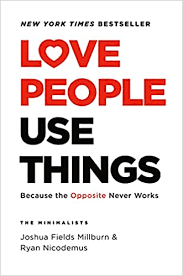
I often don't have time to read many books fully from cover to cover these days. But one book that I just wrapped up (that I started reading back in August!), titled, Love People, Use Things: Because the Opposite Never Works, has had a profound impact on my life. I highly recommend it to others.
Written by childhood friends and business partners Joshua Fields Millburn and Ryan Nicodemus, whom, as a pair, are known as The Minimalists, I bought the book from my local Target store for reading material on my flights to and from Key West this past August. The book had just recently come out a month earlier, back in mid-July 2021. The Minimalists had written a few books before this one, which I have yet to explore. What prompted me to pick this one up, though, was discovering their 2016 documentary, Minimalism: A Documentary About the Important Things, on Netflix. A few days ago, I just watched their most recent film (2021), also available on Netflix, titled, The Minimalists: Less Is Now. I highly recommend both of these documentaries. Very powerful and moving.
In Love People, Use Things, the duo reflect on how reducing all the clutter and noise in our lives - all the junk gathering dust in our closets, basements, and storage units; all the clothes we never seem to get around to wearing; the long hours we're putting in at work and the mounds of debt we're accumulating just to keep up appearances and look "successful" to all our friends, co-workers, neighbors, and even our own family members (The "keeping up with the Joneses" mentality), etc., etc. - can help us live more fulfilling, meaningful, productive lives. By committing to a simpler lifestyle and only holding onto the possessions that truly bring us joy or add value to our lives, we are free to devote more of our energy, time, talents, and other resources to the things that really do matter in life - to hobbies and creative endeavors that bring us joy; to the relationships in our lives; to giving back to others; to making memories through unforgettable experiences. Consuming less liberates us to be able to create more.
The pair reminisce on how they spent their 20s climbing the corporate ladder - at the same company but in different roles and departments - while raking in the dough and owning anything and everything they wanted, only to arrive at the realization that they weren't happy. Both of them grew up poor and in not the best of home/family circumstances, and this is what gave them the drive to push harder and harder for "success." In the end, though, it was all in vain. All they ended up with was the accumulation of stuff, massive credit card debt from acquiring said stuff, and a feeling of emptiness. As Millburn describes it, he was living the American Dream, but it wasn't his dream. In the same month, Millburn lost both his mom (to cancer) and his marriage. It was then that he realized something had to change. He was the first of the duo to stumble upon the philosophy of minimalism, and would later introduce it to childhood friend Nicodemus. Nicodemus noticed his longtime pal seemed happier, and so he took him out to lunch one day at a Subway to get the scoop. The rest, as they say, is history.
You can learn more about Joshua Fields Millburn and Ryan Nicodemus, The Minimalists, at this Wikipedia page dedicated to them. Check out their main website and explore their blog, podcast, and other creative works at TheMinimalists.com.
Subscribe to:
Comments (Atom)