Howdy! It's been a while since you've personally heard from me writing in my own voice on this blog. Sure, I've been busy sharing the beauty, truth, and joy of the Catholic faith here. I've been hard at work putting together a lot of biographies, exploring the world of music posts, content about the Soviet Union and the realm of International Relations, and even an article about the seemingly obscure topic of economic stagflation of 1974 plaguing the United States during the administration of President Gerald Ford following the resignation of President Richard Nixon. And speaking of President Gerald Ford, I recently bought a biography on him at a St. Vincent de Paul store, and so that piqued my interest in wanting to dive deeper into the Republican Party of the 1960s and 70s, sparking these essays on the post-Eisenhower split of the Republican Party into liberal and conservative wings, with the liberal/moderate faction being led by the likes of Nelson Rockefeller, among other figures. Yep, I've been pretty busy here. But again, it's been some time since you've heard from me on a personal note.
I sincerely hope this message finds you well! I don't even know where to begin in catching you up to speed on what I've been up to both personally and professionally over the last year or so. I'll give it my best here. This past August, 2024, I moved from the greater Milwaukee area in Wisconsin to Sioux Falls, South Dakota to be near my now-wife, Katie, who is a lifelong resident here. Katie and me first started talking on CatholicMatch.com back in May 2023, and we just married this past December (2024). In addition to loving my wife deeply, I've also really fallen in love with Sioux Falls and its surrounding communities. It's beautiful here. There is so much to explore in terms of nature, recreation, arts and entertainment, and dining. Exploring my new home with Katie has certainly kept me busy when I'm not working or spending time with family, namely the 16 nieces and nephews I inherited upon saying, "I do," adding to my sister's two boys back home.
Speaking of working, I am now teaching at a Catholic classical school called St. Joseph Academy. I just wrapped up the 2024-2025 school year teaching a combined grades 4/5 class there, as well as pre-algebra to a combined 6/7. For the upcoming 2025-2026 school year, I'll be teaching a combined 5/6, as well as algebra to 7/8. In addition to my teaching at St. Joseph Academy, I also work as a substitute teacher, substitute paraprofessional, and substitute after-school care assistant for Bishop O'Gorman Catholic Schools. I'm keeping busy working full-time this summer for O'Gorman's Summer Care program. And I'm working to grow my opportunities as a tutor in Sioux Falls and as a Catholic speaker in Sioux Falls.
As for the blog here, and in closing, it continues to be a labor of love bringing me great joy and satisfaction. It will be seven years ago later on this December, 2025, since I launched Mr. Robertson's Corner while working as a special education paraprofessional at Whitnall High School in Greenfield, Wisconsin, my first full-time job in K-12 education. Seven years already. Boy, does time fly. And since then, I'm grateful - truly grateful - to have gained your trust, support, and regular readership. It's you that keeps this project going strong for me. We're just a few posts away from 500, and we're approaching 1.5 million hits. Thank you so much for everything, and God bless!
Aaron
Saturday, May 31, 2025

Friday, May 30, 2025
Free resources for AP students
Welcome AP students and AP teachers!
Here's a small taste of what Mr. Robertson's Corner blog has to offer to both AP students and AP teachers looking for quality teaching and learning materials:
Broad coverage of AP-relevant disciplines. The blog explores core AP subjects - from U.S. and world history, government and political science, to economics, English, science, and math - all in one place, making it easy to find targeted content for multiple courses.
In-depth, essay-style analyses. Posts like the recent detailed biographies of Gerald Ford and Nelson Rockefeller, or explorations such as the Democratic Peace Theory, model the kind of nuanced, evidence-based writing AP readers look for. These essays include clear explanations, historical context, and thoughtful argumentation - perfect for honing reading, writing, and research skills.
Explicit test-prep guidance. “Test prep” is one of the blog’s stated focuses, with strategies for critical thinking, essay construction, and content review that directly support AP exam preparation.
Interdisciplinary connections & project ideas. Posts like “How to connect subjects and experiences” offer PBL-style and thematic-unit approaches that parallel AP Seminar and Capstone frameworks, helping students develop transferable skills across disciplines.
Teacher-focused resources & philosophy. On dedicated pages (e.g. “Aaron’s teaching philosophy” and his CV), AP teachers can gain insight into effective pedagogical approaches, find guest-speaking opportunities, and even adapt classroom activities directly from Aaron’s own practice.
Student well-being support. A whole page is devoted to mental health resources for students, acknowledging the stress of AP courses and providing strategies and links to help maintain balance during rigorous study periods.
Regularly updated content. New essays and reflections appear frequently (often multiple times per week), so both teachers and students always have fresh material to explore and discuss.
Free and easily accessible. No paywall or subscription is required - anyone with an Internet connection can use the site in class, assign readings, or review posts at home at no cost.
Opportunities for personalized support. With pages for “Tutor in Sioux Falls,” “Connect with Aaron,” and testimonials, students and teachers can arrange one-on-one help or classroom visits, adding a human element that many online resources lack.
What to Look for in a Website That Provides Quality Resources for AP Students and AP Teachers
As Advanced Placement (AP) courses continue to grow in popularity, so does the demand for high-quality educational support. Both AP students and teachers need reliable, accurate, and accessible tools to help master course material and prep for the rigorous AP exams. But with thousands of websites claiming to offer the best “resources for AP students” and “resources for AP teachers,” how can you separate the truly useful from the digital noise?
Here’s a comprehensive guide to what you should look for in a quality AP resource website - whether you're an ambitious student or a dedicated teacher.
1. Alignment with the College Board Curriculum
The most important factor in any AP resource is alignment with the official College Board curriculum. A good website will clearly indicate which AP courses it covers and how its materials support the Course and Exam Description (CED) released by the College Board.
For students, this ensures they’re studying the right content. For teachers, it provides confidence that their supplemental materials are consistent with what their students will be tested on.
Checklist:
General study tips are helpful, but AP success requires subject-level depth. A strong website should offer comprehensive coverage for individual AP subjects such as AP U.S. History, AP Biology, AP Calculus, and others. This includes:
3. Differentiated Tools for Students and Teachers
A website that serves both audiences should make it easy to navigate between “resources for AP students” and “resources for AP teachers.” These two groups have different needs.
Students need:
4. Credibility and Author Expertise
Not all AP content online is created by qualified educators. Trustworthy sites will provide information about their content creators - preferably certified AP teachers or subject matter experts. They may also partner with school districts, education nonprofits, or even the College Board itself.
Look for:
Static PDFs and outdated blog posts aren’t enough anymore. Today’s best AP resource platforms are interactive and adaptive. They use technology to personalize the learning experience based on a student’s strengths and weaknesses.
Examples include:
6. Affordability and Access
Many students and schools operate on tight budgets. High-quality doesn’t have to mean high-cost. The best websites offer a mix of free and premium content or institutional licenses that make access easier for entire classrooms.
Ideal platforms:
7. Community and Support
The best AP resource websites also build community. Look for platforms that offer user forums, teacher support groups, student Q&A sections, and responsive customer service.
For students, this might look like peer discussion boards or live tutoring options. For teachers, it might include online communities where they can exchange lesson ideas, classroom strategies, or tech tips.
Final Thoughts
When searching for top-tier resources for AP students and resources for AP teachers, don’t just settle for slick marketing. A great website is:
Here's a small taste of what Mr. Robertson's Corner blog has to offer to both AP students and AP teachers looking for quality teaching and learning materials:
Broad coverage of AP-relevant disciplines. The blog explores core AP subjects - from U.S. and world history, government and political science, to economics, English, science, and math - all in one place, making it easy to find targeted content for multiple courses.
In-depth, essay-style analyses. Posts like the recent detailed biographies of Gerald Ford and Nelson Rockefeller, or explorations such as the Democratic Peace Theory, model the kind of nuanced, evidence-based writing AP readers look for. These essays include clear explanations, historical context, and thoughtful argumentation - perfect for honing reading, writing, and research skills.
Explicit test-prep guidance. “Test prep” is one of the blog’s stated focuses, with strategies for critical thinking, essay construction, and content review that directly support AP exam preparation.
Interdisciplinary connections & project ideas. Posts like “How to connect subjects and experiences” offer PBL-style and thematic-unit approaches that parallel AP Seminar and Capstone frameworks, helping students develop transferable skills across disciplines.
Teacher-focused resources & philosophy. On dedicated pages (e.g. “Aaron’s teaching philosophy” and his CV), AP teachers can gain insight into effective pedagogical approaches, find guest-speaking opportunities, and even adapt classroom activities directly from Aaron’s own practice.
Student well-being support. A whole page is devoted to mental health resources for students, acknowledging the stress of AP courses and providing strategies and links to help maintain balance during rigorous study periods.
Regularly updated content. New essays and reflections appear frequently (often multiple times per week), so both teachers and students always have fresh material to explore and discuss.
Free and easily accessible. No paywall or subscription is required - anyone with an Internet connection can use the site in class, assign readings, or review posts at home at no cost.
Opportunities for personalized support. With pages for “Tutor in Sioux Falls,” “Connect with Aaron,” and testimonials, students and teachers can arrange one-on-one help or classroom visits, adding a human element that many online resources lack.
What to Look for in a Website That Provides Quality Resources for AP Students and AP Teachers
As Advanced Placement (AP) courses continue to grow in popularity, so does the demand for high-quality educational support. Both AP students and teachers need reliable, accurate, and accessible tools to help master course material and prep for the rigorous AP exams. But with thousands of websites claiming to offer the best “resources for AP students” and “resources for AP teachers,” how can you separate the truly useful from the digital noise?
Here’s a comprehensive guide to what you should look for in a quality AP resource website - whether you're an ambitious student or a dedicated teacher.
1. Alignment with the College Board Curriculum
The most important factor in any AP resource is alignment with the official College Board curriculum. A good website will clearly indicate which AP courses it covers and how its materials support the Course and Exam Description (CED) released by the College Board.
For students, this ensures they’re studying the right content. For teachers, it provides confidence that their supplemental materials are consistent with what their students will be tested on.
Checklist:
- Explicit reference to College Board standards.
- Up-to-date content for the current school year.
- Course-specific practice questions based on real exam frameworks.
General study tips are helpful, but AP success requires subject-level depth. A strong website should offer comprehensive coverage for individual AP subjects such as AP U.S. History, AP Biology, AP Calculus, and others. This includes:
- Topic breakdowns
- Sample questions with explanations
- Study guides
- Review videos
- Practice tests
3. Differentiated Tools for Students and Teachers
A website that serves both audiences should make it easy to navigate between “resources for AP students” and “resources for AP teachers.” These two groups have different needs.
Students need:
- Study guides and flashcards
- Timed practice tests
- Exam strategies
- Video tutorials
- Mobile accessibility
- Lesson plans
- Editable worksheets
- Slide decks
- Assessment tools
- Analytics for student progress
4. Credibility and Author Expertise
Not all AP content online is created by qualified educators. Trustworthy sites will provide information about their content creators - preferably certified AP teachers or subject matter experts. They may also partner with school districts, education nonprofits, or even the College Board itself.
Look for:
- Author bios or credentials
- Citations of sources
- Testimonials from other teachers and students
- Partnerships or endorsements
Static PDFs and outdated blog posts aren’t enough anymore. Today’s best AP resource platforms are interactive and adaptive. They use technology to personalize the learning experience based on a student’s strengths and weaknesses.
Examples include:
- Practice quizzes that adjust difficulty in real time
- Dashboard analytics that track student progress
- Gamified elements to boost engagement
- AI-powered tutoring assistance
6. Affordability and Access
Many students and schools operate on tight budgets. High-quality doesn’t have to mean high-cost. The best websites offer a mix of free and premium content or institutional licenses that make access easier for entire classrooms.
Ideal platforms:
- Offer free practice questions and lessons
- Have transparent pricing for additional features
- Provide school or district discounts
- Don't require long-term contracts
7. Community and Support
The best AP resource websites also build community. Look for platforms that offer user forums, teacher support groups, student Q&A sections, and responsive customer service.
For students, this might look like peer discussion boards or live tutoring options. For teachers, it might include online communities where they can exchange lesson ideas, classroom strategies, or tech tips.
Final Thoughts
When searching for top-tier resources for AP students and resources for AP teachers, don’t just settle for slick marketing. A great website is:
- Aligned with the AP curriculum
- Rich with subject-specific content
- Differentiated by user role
- Created by credentialed experts
- Interactive and adaptive
- Affordable and accessible
- Supported by a helpful community
Helsinki Accords
The Helsinki Accords: A turning point in Cold War diplomacy
The Helsinki Accords, signed on August 1, 1975, were a milestone in Cold War diplomacy. They did not end the Cold War or redraw borders, but they shifted the battleground from tanks and treaties to ideas and human rights. The agreement brought together 35 nations - including the United States, Canada, the Soviet Union, and all of Europe (except Albania) - in a joint declaration that balanced respect for national sovereignty with commitments to human rights and international cooperation. Though not legally binding, the accords had far-reaching consequences, especially in the ideological and moral dimensions of the Cold War.
What were the Helsinki Accords?
The Helsinki Accords, formally known as the Final Act of the Conference on Security and Cooperation in Europe (CSCE), were the product of nearly three years of negotiations. The document was structured into three main “baskets”:
President Gerald Ford's role and reception
President Gerald Ford inherited the negotiation process when he took office in 1974, following the resignation of Richard Nixon. By the time the accords were ready to be signed, Ford faced a difficult political landscape. Domestically, the Vietnam War had shattered public trust in government, and Cold War paranoia ran high. Signing any agreement that appeared to validate Soviet control over Eastern Europe was bound to be controversial.
Ford attended the summit in Helsinki and signed the accords, arguing that the human rights provisions would eventually empower people living under communist regimes. But many Americans saw the agreement as a concession to the USSR. Critics accused Ford of giving away too much by appearing to legitimize Soviet domination of Eastern Europe, particularly over countries like Poland, Czechoslovakia, and the Baltic states.
Within his own Republican Party, Ford faced fierce backlash. Conservative hawks, including Ronald Reagan, denounced the accords as a form of appeasement. During the 1976 presidential campaign, Ford's refusal to acknowledge that the Soviet Union dominated Eastern Europe - most infamously in a televised debate - was a major gaffe that cost him political capital and arguably helped Jimmy Carter win the election.
Long-term impact and relevance
Despite the initial backlash, the Helsinki Accords proved to be a strategic win for the West over the long term. While the Soviets got their border recognition, the human rights provisions of Basket III became a tool of subversion within their own empire. Dissident groups in Czechoslovakia (Charter 77), Poland (Solidarity), and the USSR itself (Moscow Helsinki Group) cited the accords to demand accountability from their governments. These groups used the language of the accords to expose human rights abuses and build international support.
Western governments and NGOs also seized on the Helsinki principles to criticize and pressure Eastern Bloc regimes. Over time, this sustained spotlight on human rights eroded the moral legitimacy of communist governments, contributing to the revolutions of 1989 and the eventual collapse of the Soviet Union.
Today, the spirit of the Helsinki Accords lives on through the Organization for Security and Co-operation in Europe (OSCE), the institutional descendant of the CSCE. The OSCE continues to monitor elections, mediate conflicts, and promote human rights across Europe and Central Asia. In an era of rising authoritarianism and geopolitical friction - especially with Russian aggression in Ukraine - the principles outlined in the accords remain vital. They serve as a framework for calling out violations of sovereignty and human rights, even if enforcement mechanisms remain weak.
The legacy
The Helsinki Accords stand as a paradox: an agreement dismissed at the time as toothless and naïve that ended up helping to dismantle the Soviet system from within. They reshaped the Cold War from a standoff of arms to a contest of values. They showed that diplomacy, when grounded in moral clarity, could plant seeds that grow into movements. President Ford’s decision, though politically costly, proved prescient. In the words of former dissidents, it gave them “a small piece of paper” - and that paper, over time, cracked iron walls.
In retrospect, the Accords didn’t legitimize Soviet power; they helped undermine it. That is their enduring legacy.
The Helsinki Accords, signed on August 1, 1975, were a milestone in Cold War diplomacy. They did not end the Cold War or redraw borders, but they shifted the battleground from tanks and treaties to ideas and human rights. The agreement brought together 35 nations - including the United States, Canada, the Soviet Union, and all of Europe (except Albania) - in a joint declaration that balanced respect for national sovereignty with commitments to human rights and international cooperation. Though not legally binding, the accords had far-reaching consequences, especially in the ideological and moral dimensions of the Cold War.
What were the Helsinki Accords?
The Helsinki Accords, formally known as the Final Act of the Conference on Security and Cooperation in Europe (CSCE), were the product of nearly three years of negotiations. The document was structured into three main “baskets”:
- Basket I: Political and military issues, including the inviolability of post-World War II European borders and the peaceful resolution of disputes.
- Basket II: Economic, scientific, technological, and environmental cooperation.
- Basket III: Human rights and fundamental freedoms, including freedom of thought, conscience, religion, and movement.
President Gerald Ford's role and reception
President Gerald Ford inherited the negotiation process when he took office in 1974, following the resignation of Richard Nixon. By the time the accords were ready to be signed, Ford faced a difficult political landscape. Domestically, the Vietnam War had shattered public trust in government, and Cold War paranoia ran high. Signing any agreement that appeared to validate Soviet control over Eastern Europe was bound to be controversial.
Ford attended the summit in Helsinki and signed the accords, arguing that the human rights provisions would eventually empower people living under communist regimes. But many Americans saw the agreement as a concession to the USSR. Critics accused Ford of giving away too much by appearing to legitimize Soviet domination of Eastern Europe, particularly over countries like Poland, Czechoslovakia, and the Baltic states.
Within his own Republican Party, Ford faced fierce backlash. Conservative hawks, including Ronald Reagan, denounced the accords as a form of appeasement. During the 1976 presidential campaign, Ford's refusal to acknowledge that the Soviet Union dominated Eastern Europe - most infamously in a televised debate - was a major gaffe that cost him political capital and arguably helped Jimmy Carter win the election.
Long-term impact and relevance
Despite the initial backlash, the Helsinki Accords proved to be a strategic win for the West over the long term. While the Soviets got their border recognition, the human rights provisions of Basket III became a tool of subversion within their own empire. Dissident groups in Czechoslovakia (Charter 77), Poland (Solidarity), and the USSR itself (Moscow Helsinki Group) cited the accords to demand accountability from their governments. These groups used the language of the accords to expose human rights abuses and build international support.
Western governments and NGOs also seized on the Helsinki principles to criticize and pressure Eastern Bloc regimes. Over time, this sustained spotlight on human rights eroded the moral legitimacy of communist governments, contributing to the revolutions of 1989 and the eventual collapse of the Soviet Union.
Today, the spirit of the Helsinki Accords lives on through the Organization for Security and Co-operation in Europe (OSCE), the institutional descendant of the CSCE. The OSCE continues to monitor elections, mediate conflicts, and promote human rights across Europe and Central Asia. In an era of rising authoritarianism and geopolitical friction - especially with Russian aggression in Ukraine - the principles outlined in the accords remain vital. They serve as a framework for calling out violations of sovereignty and human rights, even if enforcement mechanisms remain weak.
The legacy
The Helsinki Accords stand as a paradox: an agreement dismissed at the time as toothless and naïve that ended up helping to dismantle the Soviet system from within. They reshaped the Cold War from a standoff of arms to a contest of values. They showed that diplomacy, when grounded in moral clarity, could plant seeds that grow into movements. President Ford’s decision, though politically costly, proved prescient. In the words of former dissidents, it gave them “a small piece of paper” - and that paper, over time, cracked iron walls.
In retrospect, the Accords didn’t legitimize Soviet power; they helped undermine it. That is their enduring legacy.
Thursday, May 29, 2025
Resources for homeschool parents
Welcome homeschool parents!
Here's a small taste of what Mr. Robertson's Corner blog has to offer to homeschool families looking for quality teaching and learning materials:
Wide-ranging, interdisciplinary content: Mr. Robertson’s Corner covers history, philosophy, critical thinking, math, science, the trades, business, entrepreneurship, financial literacy, the arts, social sciences, test prep, and much more - allowing homeschool parents to draw on one source for multiple subjects and learning styles.
Multi-level support (middle school through college): Posts and resources are explicitly aimed at middle school, high school, and even undergraduate students, making it easy to find age-appropriate materials for each stage of a student’s education. From time to time, Mr. Robertson's Corner offers learning resources for elementary students, as well.
Homework help and test-prep guidance: The blog offers concrete homework-help strategies and test-prep insights - particularly valuable for parents guiding students through advanced courses like AP or standardized exams.
Clear teaching philosophy and methodology: A dedicated “Aaron’s teaching philosophy” page lays out pedagogical approaches that homeschoolers can easily adapt, helping parents structure lessons with proven techniques.
Dedicated mental health resources for students: An entire section on mental health support provides articles and external links, enabling parents to address social-emotional learning (SEL) alongside academics.
Engaging narratives and real-world applications: Through reflections, stories, and case studies, the blog brings abstract concepts to life - a boon for homeschool curricula that emphasize contextual learning.
Opportunities to connect with an experienced educator: Options for one-on-one tutoring, Catholic speaking engagements, and direct “Connect with Aaron” contact empower parents to seek personalized guidance or enrichment sessions.
Support for faith-based education: Coverage of the Catholic faith alongside secular topics makes the blog especially attractive for families integrating religious studies into their homeschool plan.
Completely free, easily navigable online resource: All content is freely accessible, searchable, and organized by category - ideal for budget-conscious homeschoolers seeking high-quality materials without subscription fees.
Regularly updated, with fresh content: Frequent posts (e.g., biographical essays, thematic analyses) ensure parents and students always have new material to explore and discuss.
What to Look for in a Website That Provides Quality Resources for Homeschool Parents
In the world of homeschooling, the right resources can make all the difference. Whether you're new to teaching your kids at home or you're a seasoned pro looking for fresh material, finding a reliable online hub is essential. But with thousands of sites claiming to offer the best resources for homeschool parents, how do you know which ones actually deliver?
This guide breaks down exactly what to look for when evaluating a homeschooling website, so you can spend less time searching and more time teaching.
1. Clear Focus on Homeschooling Needs
2. Curriculum Variety and Flexibility
Every homeschool family is different. A strong resource site should provide access to a variety of curriculum options, not just promote one method or publisher. Look for:
3. Ease of Navigation and Organization
A cluttered or outdated site wastes your time. Good homeschool resource websites are user-friendly, logically organized, and easy to search. Look for:
5. Community and Support
Homeschooling can feel isolating. A strong website should offer community features and parent support, such as:
6. Affordability and Transparency
Homeschooling can get expensive fast. Quality websites often offer:
Here's a small taste of what Mr. Robertson's Corner blog has to offer to homeschool families looking for quality teaching and learning materials:
Wide-ranging, interdisciplinary content: Mr. Robertson’s Corner covers history, philosophy, critical thinking, math, science, the trades, business, entrepreneurship, financial literacy, the arts, social sciences, test prep, and much more - allowing homeschool parents to draw on one source for multiple subjects and learning styles.
Multi-level support (middle school through college): Posts and resources are explicitly aimed at middle school, high school, and even undergraduate students, making it easy to find age-appropriate materials for each stage of a student’s education. From time to time, Mr. Robertson's Corner offers learning resources for elementary students, as well.
Homework help and test-prep guidance: The blog offers concrete homework-help strategies and test-prep insights - particularly valuable for parents guiding students through advanced courses like AP or standardized exams.
Clear teaching philosophy and methodology: A dedicated “Aaron’s teaching philosophy” page lays out pedagogical approaches that homeschoolers can easily adapt, helping parents structure lessons with proven techniques.
Dedicated mental health resources for students: An entire section on mental health support provides articles and external links, enabling parents to address social-emotional learning (SEL) alongside academics.
Engaging narratives and real-world applications: Through reflections, stories, and case studies, the blog brings abstract concepts to life - a boon for homeschool curricula that emphasize contextual learning.
Opportunities to connect with an experienced educator: Options for one-on-one tutoring, Catholic speaking engagements, and direct “Connect with Aaron” contact empower parents to seek personalized guidance or enrichment sessions.
Support for faith-based education: Coverage of the Catholic faith alongside secular topics makes the blog especially attractive for families integrating religious studies into their homeschool plan.
Completely free, easily navigable online resource: All content is freely accessible, searchable, and organized by category - ideal for budget-conscious homeschoolers seeking high-quality materials without subscription fees.
Regularly updated, with fresh content: Frequent posts (e.g., biographical essays, thematic analyses) ensure parents and students always have new material to explore and discuss.
What to Look for in a Website That Provides Quality Resources for Homeschool Parents
In the world of homeschooling, the right resources can make all the difference. Whether you're new to teaching your kids at home or you're a seasoned pro looking for fresh material, finding a reliable online hub is essential. But with thousands of sites claiming to offer the best resources for homeschool parents, how do you know which ones actually deliver?
This guide breaks down exactly what to look for when evaluating a homeschooling website, so you can spend less time searching and more time teaching.
1. Clear Focus on Homeschooling Needs
A quality website tailored to homeschool parents should demonstrate a clear understanding of what homeschooling families actually need. This includes:
- Lesson plans that align with various age groups and learning styles.
- Curriculum guidance - whether for structured classical homeschooling or unschooling.
- State-specific legal info about homeschooling regulations and requirements.
- Support for parents navigating both academic and emotional aspects of homeschooling.
2. Curriculum Variety and Flexibility
Every homeschool family is different. A strong resource site should provide access to a variety of curriculum options, not just promote one method or publisher. Look for:
- PDF downloads, interactive worksheets, and video lessons.
- Subject-specific content: math, science, language arts, history, art, etc.
- Materials for different grade levels - from preschool to high school.
- Support for special education or gifted learners.
3. Ease of Navigation and Organization
A cluttered or outdated site wastes your time. Good homeschool resource websites are user-friendly, logically organized, and easy to search. Look for:
- A clean menu layout with categories by subject, grade, or theme.
- An efficient search function with filters.
- Clear descriptions and previews of each resource before download or purchase.
- Mobile responsiveness for use on phones or tablets.
The more intuitive the site, the quicker you can find what you need and get back to teaching.
4. Expertise and Credibility
Quality resources come from people who know what they’re doing. When evaluating a site, ask yourself: Are the materials created by certified educators or experienced homeschoolers?
- Is there transparency about who runs the site and their qualifications?
- Do they reference up-to-date educational standards?
5. Community and Support
Homeschooling can feel isolating. A strong website should offer community features and parent support, such as:
- Active forums or comment sections.
- Access to live Q&A sessions or webinars.
- Printable planners and checklists.
- Articles and blogs on homeschooling strategies, time management, and self-care.
6. Affordability and Transparency
Homeschooling can get expensive fast. Quality websites often offer:
- A mix of free and paid resources.
- Clear pricing - no hidden fees or surprise subscriptions.
- Free trials or sample downloads.
- Honest reviews and user ratings.
While not everything valuable has to be free, a site that balances affordability with quality is a win for any homeschool budget.
7. Regular Updates and Fresh Content
Education changes, and so do kids' needs. The best homeschool websites are updated regularly with:
- New lesson plans tied to current events or seasons.
- Updated legal info by state.
- Fresh blog posts or user-submitted ideas.
- Active email newsletters with highlights and teaching tips.
Outdated or abandoned sites won’t help you stay ahead of the curve.
8. Secured and Ad-Free Experience
Safety and focus matter, especially when kids are involved. Trustworthy sites that provide resources for homeschool parents should:
- Be secure (look for "https").
- Minimize or eliminate ads that distract or lead to inappropriate content.
- Avoid clickbait and prioritize user experience over monetization.
A professional, distraction-free platform keeps the focus where it belongs - on learning.
Conclusion
Finding reliable resources for homeschool parents doesn’t have to be a gamble. By looking for clear focus, curriculum variety, ease of use, expert backing, community support, affordability, fresh content, and a secure experience, you’ll know when you’ve found a site worth bookmarking.
Homeschooling is a full-time job. Your resource site should feel like a trusted teaching partner - not just a content warehouse. Make sure it earns a place in your daily routine by offering tools that truly support your homeschool journey.
Wednesday, May 28, 2025
Whip Inflation Now campaign WIN 1974
Stagflation and the Ford administration's "Whip Inflation Now" (WIN) campaign in 1974
In 1974, the United States found itself in the grip of a confounding economic crisis that defied the traditional playbook of economists. Inflation was soaring. Unemployment was rising. Economic growth was stagnant. These conditions weren’t supposed to coexist - not according to the dominant Keynesian models of the time, which held that inflation and unemployment had an inverse relationship. What emerged was something altogether different and troubling: stagflation - a term that would be coined and cemented into the economic lexicon that same year.
The rise of stagflation
The concept of stagflation - simultaneous stagnation and inflation - had been whispered before, but by 1974 it was shouted. This was the year economists had to face a grim reality: the postwar consensus that high unemployment could be cured by fiscal stimulus, and that inflation could be tamed by cooling off the economy, was breaking down.
A perfect storm was hitting the U.S. economy. First, the oil shock of 1973, triggered by the OPEC oil embargo, quadrupled energy prices virtually overnight. This sent costs spiraling across sectors, triggering cost-push inflation, where higher input costs lead to rising consumer prices. Second, the Bretton Woods system - under which global currencies were pegged to the U.S. dollar, which in turn was backed by gold - had collapsed in 1971 under President Nixon, leading to a devaluation of the dollar and further inflationary pressure.
Meanwhile, industries across the country were slowing down. Layoffs mounted. Productivity sagged. The unemployment rate climbed above 7% by 1974. Inflation, however, surged past 12%. For policymakers and economists alike, it was a paradox. The old rules no longer applied. The Phillips Curve, which supposedly mapped a trade-off between inflation and unemployment, was now in question. What do you do when you have both?
Enter President Gerald Ford and the "WIN" campaign
When Gerald R. Ford assumed the presidency in August 1974 after Richard Nixon’s resignation, he inherited this economic quagmire. He also inherited a deep skepticism about government credibility in the wake of Watergate. Americans were angry, anxious, and uncertain - and the economy was at the heart of it all.
Ford’s administration sought an answer, and by October 1974, he unveiled what would become a hallmark - and a cautionary tale - of presidential economic policy: the "Whip Inflation Now" campaign, or WIN.
The core idea of WIN was to enlist the American public in a grassroots fight against inflation. The administration likened inflation to an enemy that needed to be defeated not just by policymakers, but by collective civic virtue. Ford encouraged Americans to tighten their belts: conserve energy, reduce spending, save more, and avoid wage and price hikes.
WIN had the branding power of a political campaign. Red-and-white buttons with “WIN” in block letters were distributed across the country. Citizens were asked to sign “WIN pledges.” Volunteers were called on to act as “Inflation Fighters.” The Department of Agriculture issued tips on gardening and home canning. WIN committees were formed in cities and towns to promote voluntary frugality.
But there was a problem: there was no actual policy behind it.
The weakness of WIN
WIN was not backed by the kind of aggressive fiscal or monetary policy typically used to address inflation. There were no immediate tax hikes, no spending freezes, and the Federal Reserve - concerned about recession - was reluctant to raise interest rates aggressively. The campaign was almost entirely voluntary and symbolic. Critics lampooned it as empty moralizing. Economist Milton Friedman called it “a political gimmick.”
The public didn’t buy it, either. Many saw WIN as tone-deaf, a distraction from the systemic nature of the economic crisis. Inflation wasn’t going to be defeated by citizens planting tomatoes or turning down their thermostats. The campaign quickly lost steam and credibility. By early 1975, it was largely abandoned.
Meanwhile, the economy continued to struggle. GDP contracted sharply in 1974 and early 1975. The U.S. entered what was then the worst recession since the Great Depression. Inflation remained elevated. Unemployment crept toward 9%. In response, Congress passed a large tax cut in 1975 and increased federal spending, moving away from the voluntary ethos of WIN and toward more conventional Keynesian stimulus.
Legacy and lessons
The failure of WIN and the trauma of stagflation in the mid-1970s had a long-lasting impact on economic thinking and policy. It marked the beginning of the end for Keynesian orthodoxy in the U.S. and opened the door for the monetarist and supply-side revolutions of the late 1970s and early 1980s. The Federal Reserve, under Paul Volcker, would later attack inflation with tight monetary policy in the early Reagan years - deliberately pushing the economy into recession to reset expectations and tame prices.
As for Gerald Ford, the economic turmoil under his watch, combined with the public perception of a leader offering slogans in place of solutions, weakened his position going into the 1976 election, which he narrowly lost to Jimmy Carter.
Conclusion
Stagflation in 1974 upended economic assumptions and exposed the limits of government messaging without policy muscle. The term captured a new reality: an economy beset by inflation and stagnation simultaneously, immune to easy fixes. Ford’s “Whip Inflation Now” campaign was a well-meaning gesture, but in the end, it underscored the importance of real economic action over symbolic appeals. The crisis of 1974 forced a reckoning in economic policy - and left behind a cautionary tale about the dangers of underestimating complexity with oversimplified solutions.
In 1974, the United States found itself in the grip of a confounding economic crisis that defied the traditional playbook of economists. Inflation was soaring. Unemployment was rising. Economic growth was stagnant. These conditions weren’t supposed to coexist - not according to the dominant Keynesian models of the time, which held that inflation and unemployment had an inverse relationship. What emerged was something altogether different and troubling: stagflation - a term that would be coined and cemented into the economic lexicon that same year.
The rise of stagflation
The concept of stagflation - simultaneous stagnation and inflation - had been whispered before, but by 1974 it was shouted. This was the year economists had to face a grim reality: the postwar consensus that high unemployment could be cured by fiscal stimulus, and that inflation could be tamed by cooling off the economy, was breaking down.
A perfect storm was hitting the U.S. economy. First, the oil shock of 1973, triggered by the OPEC oil embargo, quadrupled energy prices virtually overnight. This sent costs spiraling across sectors, triggering cost-push inflation, where higher input costs lead to rising consumer prices. Second, the Bretton Woods system - under which global currencies were pegged to the U.S. dollar, which in turn was backed by gold - had collapsed in 1971 under President Nixon, leading to a devaluation of the dollar and further inflationary pressure.
Meanwhile, industries across the country were slowing down. Layoffs mounted. Productivity sagged. The unemployment rate climbed above 7% by 1974. Inflation, however, surged past 12%. For policymakers and economists alike, it was a paradox. The old rules no longer applied. The Phillips Curve, which supposedly mapped a trade-off between inflation and unemployment, was now in question. What do you do when you have both?
Enter President Gerald Ford and the "WIN" campaign
When Gerald R. Ford assumed the presidency in August 1974 after Richard Nixon’s resignation, he inherited this economic quagmire. He also inherited a deep skepticism about government credibility in the wake of Watergate. Americans were angry, anxious, and uncertain - and the economy was at the heart of it all.
Ford’s administration sought an answer, and by October 1974, he unveiled what would become a hallmark - and a cautionary tale - of presidential economic policy: the "Whip Inflation Now" campaign, or WIN.
The core idea of WIN was to enlist the American public in a grassroots fight against inflation. The administration likened inflation to an enemy that needed to be defeated not just by policymakers, but by collective civic virtue. Ford encouraged Americans to tighten their belts: conserve energy, reduce spending, save more, and avoid wage and price hikes.
WIN had the branding power of a political campaign. Red-and-white buttons with “WIN” in block letters were distributed across the country. Citizens were asked to sign “WIN pledges.” Volunteers were called on to act as “Inflation Fighters.” The Department of Agriculture issued tips on gardening and home canning. WIN committees were formed in cities and towns to promote voluntary frugality.
But there was a problem: there was no actual policy behind it.
The weakness of WIN
WIN was not backed by the kind of aggressive fiscal or monetary policy typically used to address inflation. There were no immediate tax hikes, no spending freezes, and the Federal Reserve - concerned about recession - was reluctant to raise interest rates aggressively. The campaign was almost entirely voluntary and symbolic. Critics lampooned it as empty moralizing. Economist Milton Friedman called it “a political gimmick.”
The public didn’t buy it, either. Many saw WIN as tone-deaf, a distraction from the systemic nature of the economic crisis. Inflation wasn’t going to be defeated by citizens planting tomatoes or turning down their thermostats. The campaign quickly lost steam and credibility. By early 1975, it was largely abandoned.
Meanwhile, the economy continued to struggle. GDP contracted sharply in 1974 and early 1975. The U.S. entered what was then the worst recession since the Great Depression. Inflation remained elevated. Unemployment crept toward 9%. In response, Congress passed a large tax cut in 1975 and increased federal spending, moving away from the voluntary ethos of WIN and toward more conventional Keynesian stimulus.
Legacy and lessons
The failure of WIN and the trauma of stagflation in the mid-1970s had a long-lasting impact on economic thinking and policy. It marked the beginning of the end for Keynesian orthodoxy in the U.S. and opened the door for the monetarist and supply-side revolutions of the late 1970s and early 1980s. The Federal Reserve, under Paul Volcker, would later attack inflation with tight monetary policy in the early Reagan years - deliberately pushing the economy into recession to reset expectations and tame prices.
As for Gerald Ford, the economic turmoil under his watch, combined with the public perception of a leader offering slogans in place of solutions, weakened his position going into the 1976 election, which he narrowly lost to Jimmy Carter.
Conclusion
Stagflation in 1974 upended economic assumptions and exposed the limits of government messaging without policy muscle. The term captured a new reality: an economy beset by inflation and stagnation simultaneously, immune to easy fixes. Ford’s “Whip Inflation Now” campaign was a well-meaning gesture, but in the end, it underscored the importance of real economic action over symbolic appeals. The crisis of 1974 forced a reckoning in economic policy - and left behind a cautionary tale about the dangers of underestimating complexity with oversimplified solutions.
Gerald Ford biography
Gerald R. Ford: The unelected president and his steady hand in a tumultuous time
Gerald R. Ford, the 38th president of the United States, holds a unique place in American history. He is the only person to have served as both vice president and president without being elected to either office. A man of integrity and moderation, Ford spent 25 years in the House of Representatives before becoming the nation's accidental president amid the political wreckage of Watergate. His presidency, though brief and often overlooked, was pivotal in restoring trust in American institutions during a crisis of confidence. His career reflects a time when bipartisan cooperation was still possible, and his political and economic beliefs represented a pragmatic conservatism that would soon be eclipsed by ideological shifts within the Republican Party.
Early life and political rise
Born Leslie Lynch King Jr. in Omaha, Nebraska, in 1913, Ford was renamed after his stepfather, Gerald Rudolff Ford. He grew up in Grand Rapids, Michigan, excelled in athletics, and played football at the University of Michigan. After earning a law degree from Yale and serving in the U.S. Navy during World War II, Ford entered politics with a reputation for decency and discipline.
In 1948, Ford was elected to the House of Representatives from Michigan’s 5th congressional district. Over the next 25 years, he won re-election 12 times, building a reputation as a hardworking, affable legislator with a conservative but pragmatic outlook. While firmly anti-communist and supportive of fiscal restraint, he also supported some civil rights legislation, distinguishing himself from the more reactionary members of his party.
Ford’s legislative career was marked by loyalty to institutional norms and a belief in incremental change. He rose to become the House Minority Leader in 1965. As leader, he was respected by colleagues on both sides of the aisle for his honesty and reliability, although he was not seen as a major visionary. His goal was always to make government work better, not to tear it down or radically remake it.
The unelected vice president and president
Ford’s political life took an extraordinary turn in 1973. When Vice President Spiro Agnew resigned amid a tax evasion scandal, President Richard Nixon needed a replacement who could be quickly confirmed and would not generate controversy. Ford, with his spotless reputation and strong relationships in Congress, was the obvious choice. He was confirmed overwhelmingly by both chambers and became vice president in December 1973.
Less than a year later, Nixon himself was forced to resign in the wake of the Watergate scandal. On August 9, 1974, Ford became president. He inherited a nation reeling from scandal, plagued by economic malaise, and still scarred by the Vietnam War. In his first address as president, Ford famously said, “Our long national nightmare is over,” signaling a return to honesty and competence.
The Ford presidency: Achievements and struggles
Ford’s presidency lasted just 895 days, but it was one of the most consequential transitional periods in modern American politics. His most controversial decision came just a month into office, when he granted Nixon a full pardon. Ford believed it was necessary to move the country forward, but the backlash was intense. Many saw it as a deal or a betrayal, and his approval ratings plummeted. Still, Ford never wavered in his belief that the pardon was the right decision for the country.
Economically, Ford faced severe headwinds. The 1970s were marked by “stagflation” - a combination of high inflation and stagnant economic growth. In response, Ford launched the “Whip Inflation Now” (WIN) campaign, a public effort to encourage thrift and price control, but it lacked teeth and was widely ridiculed. Behind the scenes, however, Ford worked with Congress on more substantive measures, including tax rebates and spending cuts.
In foreign policy, Ford continued the détente strategy with the Soviet Union initiated by Nixon, and he signed the Helsinki Accords in 1975, which improved U.S.-Soviet relations and promoted human rights in Eastern Europe. He also oversaw the final, chaotic withdrawal of American forces and personnel from Vietnam in April 1975. Though painful and symbolic of a broader decline in U.S. influence, Ford managed the evacuation without further entanglement.
Domestically, Ford vetoed dozens of bills passed by the Democratic-controlled Congress, attempting to rein in what he viewed as excessive government spending. He positioned himself as a moderate Republican, supportive of business and wary of big government, but not hostile to compromise.
Republican Party in transition
During Ford’s presidency, the Republican Party was undergoing a profound ideological shift. The rise of the conservative movement, epitomized by leading figures like Barry Goldwater and Ronald Reagan, was beginning to challenge the moderate wing of the party that Ford represented. His selection of Nelson Rockefeller to serve as his vice president further alienated the Ford administration from the Republican Party's growing conservative base. In the 1976 Republican primaries, Ford barely held off a strong challenge from Reagan, who criticized Ford’s foreign policy as weak and his economic policies as ineffective.
This intraparty struggle revealed the growing divide between establishment Republicans and a rising base energized by anti-government sentiment, cultural conservatism, and a more aggressive foreign policy stance. Ford’s brand of pragmatic conservatism - pro-business, fiscally cautious, socially moderate - was increasingly seen as outdated. His loss to Jimmy Carter in the 1976 general election marked not just a personal defeat but also a harbinger of the GOP's rightward shift.
Legacy
Gerald Ford’s legacy is one of decency, stability, and integrity. He restored a measure of trust in the presidency at a time when it was badly needed. Though not a transformative figure, he was a transitional one - steadying the ship of state at a critical moment. He governed with humility and a deep respect for democratic institutions, values that would become rarer in the decades that followed.
His economic policies may not have solved the challenges of the 1970s, but they reflected a principled attempt to manage a difficult reality without resorting to demagoguery. Politically, his moderation and willingness to work with Democrats foreshadowed a vanishing breed of centrist Republican.
In hindsight, Ford’s presidency reminds us of the importance of character and competence. He may not have sought the presidency, but once it was thrust upon him, he met the moment with calm, conviction, and honesty. That alone makes his story - and his example - worth remembering.
Gerald R. Ford, the 38th president of the United States, holds a unique place in American history. He is the only person to have served as both vice president and president without being elected to either office. A man of integrity and moderation, Ford spent 25 years in the House of Representatives before becoming the nation's accidental president amid the political wreckage of Watergate. His presidency, though brief and often overlooked, was pivotal in restoring trust in American institutions during a crisis of confidence. His career reflects a time when bipartisan cooperation was still possible, and his political and economic beliefs represented a pragmatic conservatism that would soon be eclipsed by ideological shifts within the Republican Party.
Early life and political rise
Born Leslie Lynch King Jr. in Omaha, Nebraska, in 1913, Ford was renamed after his stepfather, Gerald Rudolff Ford. He grew up in Grand Rapids, Michigan, excelled in athletics, and played football at the University of Michigan. After earning a law degree from Yale and serving in the U.S. Navy during World War II, Ford entered politics with a reputation for decency and discipline.
In 1948, Ford was elected to the House of Representatives from Michigan’s 5th congressional district. Over the next 25 years, he won re-election 12 times, building a reputation as a hardworking, affable legislator with a conservative but pragmatic outlook. While firmly anti-communist and supportive of fiscal restraint, he also supported some civil rights legislation, distinguishing himself from the more reactionary members of his party.
Ford’s legislative career was marked by loyalty to institutional norms and a belief in incremental change. He rose to become the House Minority Leader in 1965. As leader, he was respected by colleagues on both sides of the aisle for his honesty and reliability, although he was not seen as a major visionary. His goal was always to make government work better, not to tear it down or radically remake it.
The unelected vice president and president
Ford’s political life took an extraordinary turn in 1973. When Vice President Spiro Agnew resigned amid a tax evasion scandal, President Richard Nixon needed a replacement who could be quickly confirmed and would not generate controversy. Ford, with his spotless reputation and strong relationships in Congress, was the obvious choice. He was confirmed overwhelmingly by both chambers and became vice president in December 1973.
Less than a year later, Nixon himself was forced to resign in the wake of the Watergate scandal. On August 9, 1974, Ford became president. He inherited a nation reeling from scandal, plagued by economic malaise, and still scarred by the Vietnam War. In his first address as president, Ford famously said, “Our long national nightmare is over,” signaling a return to honesty and competence.
The Ford presidency: Achievements and struggles
Ford’s presidency lasted just 895 days, but it was one of the most consequential transitional periods in modern American politics. His most controversial decision came just a month into office, when he granted Nixon a full pardon. Ford believed it was necessary to move the country forward, but the backlash was intense. Many saw it as a deal or a betrayal, and his approval ratings plummeted. Still, Ford never wavered in his belief that the pardon was the right decision for the country.
Economically, Ford faced severe headwinds. The 1970s were marked by “stagflation” - a combination of high inflation and stagnant economic growth. In response, Ford launched the “Whip Inflation Now” (WIN) campaign, a public effort to encourage thrift and price control, but it lacked teeth and was widely ridiculed. Behind the scenes, however, Ford worked with Congress on more substantive measures, including tax rebates and spending cuts.
In foreign policy, Ford continued the détente strategy with the Soviet Union initiated by Nixon, and he signed the Helsinki Accords in 1975, which improved U.S.-Soviet relations and promoted human rights in Eastern Europe. He also oversaw the final, chaotic withdrawal of American forces and personnel from Vietnam in April 1975. Though painful and symbolic of a broader decline in U.S. influence, Ford managed the evacuation without further entanglement.
Domestically, Ford vetoed dozens of bills passed by the Democratic-controlled Congress, attempting to rein in what he viewed as excessive government spending. He positioned himself as a moderate Republican, supportive of business and wary of big government, but not hostile to compromise.
Republican Party in transition
During Ford’s presidency, the Republican Party was undergoing a profound ideological shift. The rise of the conservative movement, epitomized by leading figures like Barry Goldwater and Ronald Reagan, was beginning to challenge the moderate wing of the party that Ford represented. His selection of Nelson Rockefeller to serve as his vice president further alienated the Ford administration from the Republican Party's growing conservative base. In the 1976 Republican primaries, Ford barely held off a strong challenge from Reagan, who criticized Ford’s foreign policy as weak and his economic policies as ineffective.
This intraparty struggle revealed the growing divide between establishment Republicans and a rising base energized by anti-government sentiment, cultural conservatism, and a more aggressive foreign policy stance. Ford’s brand of pragmatic conservatism - pro-business, fiscally cautious, socially moderate - was increasingly seen as outdated. His loss to Jimmy Carter in the 1976 general election marked not just a personal defeat but also a harbinger of the GOP's rightward shift.
Legacy
Gerald Ford’s legacy is one of decency, stability, and integrity. He restored a measure of trust in the presidency at a time when it was badly needed. Though not a transformative figure, he was a transitional one - steadying the ship of state at a critical moment. He governed with humility and a deep respect for democratic institutions, values that would become rarer in the decades that followed.
His economic policies may not have solved the challenges of the 1970s, but they reflected a principled attempt to manage a difficult reality without resorting to demagoguery. Politically, his moderation and willingness to work with Democrats foreshadowed a vanishing breed of centrist Republican.
In hindsight, Ford’s presidency reminds us of the importance of character and competence. He may not have sought the presidency, but once it was thrust upon him, he met the moment with calm, conviction, and honesty. That alone makes his story - and his example - worth remembering.
Monday, May 26, 2025
Liberal Republicans
Exploring the post-Eisenhower split in the Republican Party: Liberal vs. conservative wings
An essay about the post-Eisenhower split in the Republican Party between liberal and conservative wings. What were the main causes for the split? Who were the major figures among the liberals and conservatives in the Republican Party?
The post-Eisenhower era marked a pivotal turning point for the Republican Party. From the late 1950s into the 1960s, a visible and consequential split developed between the party’s liberal and conservative factions. This internal conflict would define the GOP’s identity for decades and reshape American politics. At the heart of the division were ideological disagreements over the role of government, civil rights, foreign policy, and economic priorities. The split reflected broader tensions in American society and ultimately paved the way for the modern conservative ascendancy within the Republican Party.
Causes of the split
1. Eisenhower’s moderate legacy
President Dwight D. Eisenhower, though a Republican, governed as a centrist. He embraced a pragmatic approach to domestic policy, maintaining and even expanding elements of the New Deal welfare state. Eisenhower accepted Social Security, initiated the Interstate Highway System, and kept a balanced budget emphasis. This moderation alienated hardline conservatives who wanted a sharper ideological break from the Democrats.
2. Cold War and foreign policy
The Cold War consensus held for much of Eisenhower’s presidency, but fractures began to appear over how aggressively the U.S. should confront communism. Conservatives favored a more confrontational, moralistic stance - exemplified by figures like Barry Goldwater - while liberals supported diplomatic engagement and multilateralism. Eisenhower’s restrained approach, including his warnings against the “military-industrial complex,” added to conservative frustration.
3. Civil Rights and social change
As the civil rights movement gained momentum, Republican liberals supported legislation aimed at dismantling segregation and ensuring voting rights. Conservatives, particularly those aiming to attract Southern Democrats, were more resistant. This ideological split over civil rights - whether to champion federal intervention or emphasize states’ rights - drove a wedge between the party’s factions.
4. Economic philosophy
Liberals within the GOP supported regulated capitalism and were open to moderate government intervention to stabilize the economy and address inequality. Conservatives, however, increasingly embraced a free-market ideology with an emphasis on reducing the size of government, lowering taxes, and opposing unions. The rise of libertarian-influenced economics further deepened this division.
Key figures: Liberals vs. conservatives
Liberal Republicans
The liberal or moderate wing, sometimes called “Rockefeller Republicans,” was strongest in the Northeast and West Coast. They were socially progressive, fiscally moderate, and internationalist in foreign policy.
Conservative Republicans
The conservative wing, gaining strength in the South and West, favored limited government, strong anti-communism, and traditional social values.
The 1964 Republican National Convention crystallized the party’s split. Goldwater’s nomination over Rockefeller represented the triumph of conservatives, even as it led to a crushing loss in the general election. Many liberal Republicans, uncomfortable with Goldwater’s ideology and tone, distanced themselves or supported Lyndon Johnson.
However, Goldwater’s defeat sowed the seeds of a conservative resurgence. The liberal wing of the GOP began to erode, especially as social issues and race increasingly defined political allegiance. By the 1980s, with Ronald Reagan’s presidency, conservatism had become the dominant ideology within the Republican Party, and liberal Republicans had largely vanished.
Conclusion
The post-Eisenhower Republican split was not a temporary squabble but a foundational realignment. It marked the shift from a centrist, pragmatic party to one increasingly defined by ideological conservatism. This transformation, driven by debates over the size of government, civil rights, and national identity, reshaped American politics and set the stage for the polarized political landscape that followed. The names may have changed, but the battle lines drawn during the post-Eisenhower years continue to shape the Republican Party today.
An essay about the post-Eisenhower split in the Republican Party between liberal and conservative wings. What were the main causes for the split? Who were the major figures among the liberals and conservatives in the Republican Party?
The post-Eisenhower era marked a pivotal turning point for the Republican Party. From the late 1950s into the 1960s, a visible and consequential split developed between the party’s liberal and conservative factions. This internal conflict would define the GOP’s identity for decades and reshape American politics. At the heart of the division were ideological disagreements over the role of government, civil rights, foreign policy, and economic priorities. The split reflected broader tensions in American society and ultimately paved the way for the modern conservative ascendancy within the Republican Party.
Causes of the split
1. Eisenhower’s moderate legacy
President Dwight D. Eisenhower, though a Republican, governed as a centrist. He embraced a pragmatic approach to domestic policy, maintaining and even expanding elements of the New Deal welfare state. Eisenhower accepted Social Security, initiated the Interstate Highway System, and kept a balanced budget emphasis. This moderation alienated hardline conservatives who wanted a sharper ideological break from the Democrats.
2. Cold War and foreign policy
The Cold War consensus held for much of Eisenhower’s presidency, but fractures began to appear over how aggressively the U.S. should confront communism. Conservatives favored a more confrontational, moralistic stance - exemplified by figures like Barry Goldwater - while liberals supported diplomatic engagement and multilateralism. Eisenhower’s restrained approach, including his warnings against the “military-industrial complex,” added to conservative frustration.
3. Civil Rights and social change
As the civil rights movement gained momentum, Republican liberals supported legislation aimed at dismantling segregation and ensuring voting rights. Conservatives, particularly those aiming to attract Southern Democrats, were more resistant. This ideological split over civil rights - whether to champion federal intervention or emphasize states’ rights - drove a wedge between the party’s factions.
4. Economic philosophy
Liberals within the GOP supported regulated capitalism and were open to moderate government intervention to stabilize the economy and address inequality. Conservatives, however, increasingly embraced a free-market ideology with an emphasis on reducing the size of government, lowering taxes, and opposing unions. The rise of libertarian-influenced economics further deepened this division.
Key figures: Liberals vs. conservatives
Liberal Republicans
The liberal or moderate wing, sometimes called “Rockefeller Republicans,” was strongest in the Northeast and West Coast. They were socially progressive, fiscally moderate, and internationalist in foreign policy.
- Nelson Rockefeller: Governor of New York and a perennial presidential contender, Rockefeller symbolized the liberal wing. He supported civil rights, environmental protection, and public health initiatives, aligning with the more centrist tradition of Eisenhower. Nelson, of the famed Rockefeller dynasty, would go on to serve as Vice President of the United States from 1974-1977 during the administration of President Gerald Ford.
- William Scranton: Governor of Pennsylvania, Scranton was another liberal Republican who supported civil rights and opposed the party’s rightward drift.
- George Romney: Governor of Michigan and father of future Senator Mitt Romney, he advocated for civil rights and a compassionate conservative vision.
- Jacob Javits and Clifford Case: Senators from New York and New Jersey, respectively, these Republicans were consistent supporters of civil rights legislation and social welfare programs.
Conservative Republicans
The conservative wing, gaining strength in the South and West, favored limited government, strong anti-communism, and traditional social values.
- Barry Goldwater: The Arizona senator was the undisputed leader of the conservative revolt. His 1964 presidential campaign, though a landslide defeat, galvanized the conservative movement and marked a turning point in GOP ideology. Goldwater opposed the Civil Rights Act of 1964 on states' rights grounds and promoted individual liberty and free-market principles.
- Ronald Reagan: Though not a major national figure until later, Reagan’s 1964 speech “A Time for Choosing” made him the conservative movement’s rising star. His rhetoric championed small government, anti-communism, and tax cuts.
- William F. Buckley Jr.: Though not an elected official, Buckley played a pivotal intellectual role. Through National Review, he helped unify and legitimize the conservative movement, setting the stage for future political successes.
- Strom Thurmond: A former Democrat and segregationist, Thurmond switched to the GOP in 1964, bringing with him the rhetoric of states’ rights and helping lay the groundwork for the Southern Strategy.
The 1964 Republican National Convention crystallized the party’s split. Goldwater’s nomination over Rockefeller represented the triumph of conservatives, even as it led to a crushing loss in the general election. Many liberal Republicans, uncomfortable with Goldwater’s ideology and tone, distanced themselves or supported Lyndon Johnson.
However, Goldwater’s defeat sowed the seeds of a conservative resurgence. The liberal wing of the GOP began to erode, especially as social issues and race increasingly defined political allegiance. By the 1980s, with Ronald Reagan’s presidency, conservatism had become the dominant ideology within the Republican Party, and liberal Republicans had largely vanished.
Conclusion
The post-Eisenhower Republican split was not a temporary squabble but a foundational realignment. It marked the shift from a centrist, pragmatic party to one increasingly defined by ideological conservatism. This transformation, driven by debates over the size of government, civil rights, and national identity, reshaped American politics and set the stage for the polarized political landscape that followed. The names may have changed, but the battle lines drawn during the post-Eisenhower years continue to shape the Republican Party today.
Nelson Rockefeller
Nelson Rockefeller: A life in politics, power, and pragmatism
Nelson Aldrich Rockefeller was one of the most influential and complex figures in 20th-century American political life. Born into extreme wealth but committed to public service, Rockefeller’s legacy is a study in contrasts: a liberal Republican in an increasingly conservative party, a businessman with a taste for bureaucracy, and a vice president with power curtailed by circumstances. His life spanned roles as a philanthropist, administrator, governor, and eventually, Vice President of the United States. His political and economic philosophies reflected a unique blend of pragmatism, managerialism, and progressive reformism, often clashing with the ideological currents of his time.
Early life and foundations
Nelson Rockefeller was born on July 8, 1908, into the powerful Rockefeller family. His grandfather, John D. Rockefeller Sr., was the founder of Standard Oil and the first great American industrialist to become a household name. Nelson grew up surrounded by privilege, but unlike some heirs to immense fortunes, he took a deep interest in public policy and government administration.
Educated at Dartmouth College, Rockefeller was drawn early to both the arts and international affairs. He was not just a patron of modern art - he helped found the Museum of Modern Art in New York - but also immersed himself in public service. His early career included roles in the private sector, particularly in family-controlled enterprises like the Rockefeller Center and Chase Manhattan Bank, but his passion always leaned toward policy and government.
Roles in government before the governorship
Rockefeller's federal service began during the administration of Franklin D. Roosevelt, a Democrat, which already signaled his bipartisan appeal and pragmatic approach. He served in several positions that laid the groundwork for his internationalist worldview.
Governor of New York (1959-1973)
Rockefeller’s most sustained and impactful political role was as Governor of New York. Elected four times, he served from 1959 to 1973. As governor, he pushed an ambitious agenda of modernization, infrastructure development, and expanded state services.
Presidential ambitions and intra-Party conflict
Rockefeller ran for the Republican presidential nomination three times - in 1960, 1964, and 1968 - but never clinched it. His liberal stance on civil rights, social welfare, and government intervention alienated the conservative base of the party.
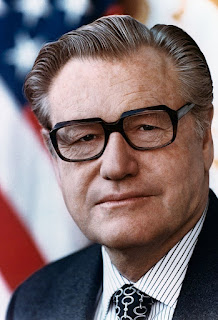 Vice Presidency under Gerald Ford (1974-1977)
Nelson Rockefeller’s appointment as Vice President by Gerald Ford came after one of the most tumultuous periods in American political history. President Richard Nixon had resigned in disgrace after the Watergate scandal, and Ford - himself appointed VP after Spiro Agnew's resignation - ascended to the presidency. Ford selected Rockefeller as a stabilizing force, aiming to reassure the public with an experienced, competent figure.
Nelson Rockefeller embodied a brand of liberal Republicanism that fused capitalist optimism with progressive social policy. His ideology rested on several core tenets:
Nelson Rockefeller died in 1979. His legacy is paradoxical. In his prime, he was a colossus - governing the nation’s most populous state, shaping postwar policy, and defining the liberal wing of the GOP. But by the time of his death, the political terrain had shifted. Ronald Reagan would soon be president, and the Republican Party would complete its transformation into a conservative movement where Rockefeller’s views were considered anachronistic.
Still, his imprint remains in many areas: in the vast public institutions of New York State, in the model of moderate Republicanism that valued competence over ideology, and in the idea that immense wealth could be used to pursue public good through ambitious governance.
Conclusion
Nelson Rockefeller was not just a politician - he was a force of nature driven by belief in action, in planning, and in the ability of human institutions to rise above chaos. His vice presidency may have been stunted, but his broader life in public service was anything but. Though often sidelined in modern political memory, Rockefeller’s blend of ambition, idealism, and pragmatism still offers a compelling alternative to today’s polarized politics.
Nelson Aldrich Rockefeller was one of the most influential and complex figures in 20th-century American political life. Born into extreme wealth but committed to public service, Rockefeller’s legacy is a study in contrasts: a liberal Republican in an increasingly conservative party, a businessman with a taste for bureaucracy, and a vice president with power curtailed by circumstances. His life spanned roles as a philanthropist, administrator, governor, and eventually, Vice President of the United States. His political and economic philosophies reflected a unique blend of pragmatism, managerialism, and progressive reformism, often clashing with the ideological currents of his time.
Early life and foundations
Nelson Rockefeller was born on July 8, 1908, into the powerful Rockefeller family. His grandfather, John D. Rockefeller Sr., was the founder of Standard Oil and the first great American industrialist to become a household name. Nelson grew up surrounded by privilege, but unlike some heirs to immense fortunes, he took a deep interest in public policy and government administration.
Educated at Dartmouth College, Rockefeller was drawn early to both the arts and international affairs. He was not just a patron of modern art - he helped found the Museum of Modern Art in New York - but also immersed himself in public service. His early career included roles in the private sector, particularly in family-controlled enterprises like the Rockefeller Center and Chase Manhattan Bank, but his passion always leaned toward policy and government.
Roles in government before the governorship
Rockefeller's federal service began during the administration of Franklin D. Roosevelt, a Democrat, which already signaled his bipartisan appeal and pragmatic approach. He served in several positions that laid the groundwork for his internationalist worldview.
- Coordinator of Inter-American Affairs (1940-1944): During World War II, Rockefeller was tasked with managing diplomatic and cultural relations with Latin America to prevent Nazi influence in the Western Hemisphere. This role showcased his administrative skill and commitment to soft power.
- Assistant Secretary of State for American Republic Affairs (1944-1945): Rockefeller advanced U.S. economic and political interests in Latin America, promoting development and alignment with U.S. war aims.
- Under Eisenhower (1950s): Rockefeller returned to federal service under President Dwight D. Eisenhower, holding posts like Chairman of the President’s Advisory Committee on Government Organization and Under Secretary of Health, Education, and Welfare. These positions reflected his interest in governmental efficiency, organization, and social investment.
Governor of New York (1959-1973)
Rockefeller’s most sustained and impactful political role was as Governor of New York. Elected four times, he served from 1959 to 1973. As governor, he pushed an ambitious agenda of modernization, infrastructure development, and expanded state services.
- Urban development and infrastructure: He was instrumental in creating the Empire State Plaza in Albany, expanding the SUNY system, and overhauling transportation networks. His investment-heavy policies aimed to keep New York a global center of commerce and culture.
- Education and health: Rockefeller championed massive expansion of the state university system and pushed for increases in healthcare spending and mental health reform. He believed in active government as a tool for lifting people up.
- Controversial policies: His "Rockefeller drug laws," passed in 1973, introduced harsh penalties for drug offenses. These laws, later criticized for fueling mass incarceration, marked a stark shift from his earlier progressive tone.
Presidential ambitions and intra-Party conflict
Rockefeller ran for the Republican presidential nomination three times - in 1960, 1964, and 1968 - but never clinched it. His liberal stance on civil rights, social welfare, and government intervention alienated the conservative base of the party.
- In 1964, he lost the nomination to Barry Goldwater, the Arizona senator who embodied the new right-wing populism sweeping the GOP. Rockefeller’s support for civil rights legislation, abortion access, and expansive government spending was out of step with an increasingly conservative base.
- His clashes with Goldwater and Richard Nixon solidified his image as the standard-bearer of "Rockefeller Republicans" - a dying breed of northeastern moderates who believed in big government and global engagement.

Nelson Rockefeller’s appointment as Vice President by Gerald Ford came after one of the most tumultuous periods in American political history. President Richard Nixon had resigned in disgrace after the Watergate scandal, and Ford - himself appointed VP after Spiro Agnew's resignation - ascended to the presidency. Ford selected Rockefeller as a stabilizing force, aiming to reassure the public with an experienced, competent figure.
- Confirmation and skepticism: Rockefeller’s confirmation process was contentious. Conservatives balked at his liberalism, his vast wealth, and his use of family foundations. He eventually won confirmation, but it was a sign of his waning influence within his own party.
- Diminished role: Ford and Rockefeller never developed a strong working relationship. Ford, facing pressure from the GOP's right flank, kept Rockefeller at arm's length. Unlike previous VPs like Lyndon Johnson or later ones like Dick Cheney, Rockefeller had limited policy sway. His ideas on domestic policy and international coordination were largely ignored.
- Domestic Council chairmanship: Ford gave him the chair of the Domestic Council, which initially seemed promising. However, when Donald Rumsfeld and Dick Cheney gained more influence in the Ford White House, Rockefeller was marginalized. His proposals were frequently sidelined, and his staff was undercut by more conservative players.
- Decision not to run in 1976: By late 1975, Ford, aiming to placate the right-wing of the party ahead of a primary challenge from Ronald Reagan, announced that Rockefeller would not be on the ticket in 1976. It was a public and painful demotion, and it marked the effective end of Rockefeller’s political career.
Nelson Rockefeller embodied a brand of liberal Republicanism that fused capitalist optimism with progressive social policy. His ideology rested on several core tenets:
- Government as problem-solver: Rockefeller believed that government, if managed efficiently, could solve large-scale social and economic problems. He rejected libertarian minimalism and conservative small-government rhetoric.
- Technocratic pragmatism: He had little patience for ideological rigidity. His solutions were often managerial rather than philosophical, and he surrounded himself with experts and bureaucrats.
- Internationalism: Rockefeller supported strong international engagement, foreign aid, and alliance-building - positions aligned with the postwar consensus but increasingly under attack by the late 1960s and 70s.
- Pro-business, but reform-oriented: As a scion of one of America’s greatest fortunes, Rockefeller was comfortable with capitalism but not blind to its faults. He supported regulation, social insurance, and public works as ways to stabilize capitalism and promote equity.
Nelson Rockefeller died in 1979. His legacy is paradoxical. In his prime, he was a colossus - governing the nation’s most populous state, shaping postwar policy, and defining the liberal wing of the GOP. But by the time of his death, the political terrain had shifted. Ronald Reagan would soon be president, and the Republican Party would complete its transformation into a conservative movement where Rockefeller’s views were considered anachronistic.
Still, his imprint remains in many areas: in the vast public institutions of New York State, in the model of moderate Republicanism that valued competence over ideology, and in the idea that immense wealth could be used to pursue public good through ambitious governance.
Conclusion
Nelson Rockefeller was not just a politician - he was a force of nature driven by belief in action, in planning, and in the ability of human institutions to rise above chaos. His vice presidency may have been stunted, but his broader life in public service was anything but. Though often sidelined in modern political memory, Rockefeller’s blend of ambition, idealism, and pragmatism still offers a compelling alternative to today’s polarized politics.
Sunday, May 18, 2025
How to connect subjects and experiences
A thought-provoking and engaging essay that answers the following guiding questions: How do seemingly separate academic subjects, as well as seemingly separate life and work experiences, go hand-in-hand with one another? What are ways that students of all ages, especially younger students, can avoid the trap of compartmentalizing subjects and experiences in their minds, as if they can never interact with each other? Clear examples that are easy to understand and relate to are provided throughout.
Humans naturally try to sort information into neat little boxes - “math over here,” “art over there,” “work over here,” “life over there.” But the real world rarely behaves this way. Our greatest insights, most creative breakthroughs, and deepest satisfactions often arise where those boxes meet, overlap, and even collide. By learning to see connections between subjects and experiences, students of every age can develop richer understanding, sharper problem-solving skills, and far more flexibility in school and in life.
The illusion of separation
Imagine you’re studying fractions in math class and painting a watercolor landscape in art class. At first glance, these activities seem utterly unrelated: one deals with numbers and the other with brushes. Yet when you mix paints, you’re performing your own form of ratio work - two parts blue, one part white, a dash of yellow to warm things up. You might not write down “⅔ blue + ⅓ white,” but your eye and your hand are making those calculations in real time.
Or take a history lesson on ancient Rome alongside a creative writing assignment. History gives you the raw material - emperors, engineers, gladiators - and writing invites you to inhabit that world, giving voice to a Roman soldier’s anxieties before battle or a senator’s lobbying efforts. History provides content; writing provides empathy; together they create something far more vivid than either discipline alone.
Why integration matters
Adults who avoid compartmentalizing thrive in careers and daily life. A journalist who understands data analysis can spot trends in large datasets. An architect with a background in environmental science designs greener buildings. Entrepreneurs blend finance, marketing, and technology to create impactful startups. And every adult negotiates, writes emails, uses basic math, and draws on past experiences - often simultaneously.
Conclusion
Life doesn’t hand us neatly labeled packets of “math,” “science,” or “history.” Instead, it presents complex, interwoven challenges. By training ourselves - and our students - to spot connections, to ask, “How can I use what I’ve already learned?” and to embrace projects that draw on multiple skills, we cultivate adaptable thinkers. Those thinkers won’t just excel on tests; they’ll innovate, collaborate, and enjoy the rich tapestry of knowledge and experience that life has to offer.
Humans naturally try to sort information into neat little boxes - “math over here,” “art over there,” “work over here,” “life over there.” But the real world rarely behaves this way. Our greatest insights, most creative breakthroughs, and deepest satisfactions often arise where those boxes meet, overlap, and even collide. By learning to see connections between subjects and experiences, students of every age can develop richer understanding, sharper problem-solving skills, and far more flexibility in school and in life.
The illusion of separation
Imagine you’re studying fractions in math class and painting a watercolor landscape in art class. At first glance, these activities seem utterly unrelated: one deals with numbers and the other with brushes. Yet when you mix paints, you’re performing your own form of ratio work - two parts blue, one part white, a dash of yellow to warm things up. You might not write down “⅔ blue + ⅓ white,” but your eye and your hand are making those calculations in real time.
Or take a history lesson on ancient Rome alongside a creative writing assignment. History gives you the raw material - emperors, engineers, gladiators - and writing invites you to inhabit that world, giving voice to a Roman soldier’s anxieties before battle or a senator’s lobbying efforts. History provides content; writing provides empathy; together they create something far more vivid than either discipline alone.
Why integration matters
- Deepens understanding - When science labs and math classes connect - say, by graphing the trajectory of a model rocket - students see how equations predict real motion.
- Boosts creativity - Engineers borrow from artists. The sleek curves of modern cars start as sketches on paper, guided as much by aesthetics as by aerodynamics.
- Builds transferable skills - A student who learns to research a term paper will find those same search-and-evaluate skills invaluable when troubleshooting code or preparing for a debate.
- Cooking and chemistry: Measuring baking powder, watching dough rise, adjusting heat - every recipe is a live chemistry experiment.
- Budgeting and math: Planning the cost of a fundraising bake sale or sorting allowance into “save,” “spend,” and “share” jars teaches percents and basic accounting.
- Gardening and biology: Tracking when peas sprout, testing soil pH, even sketching leaf shapes - students apply scientific method, record data, and discover life cycles firsthand.
- Storytelling and public speaking: Writing a short play for drama club hones narrative structure, character development, and persuasive delivery all at once.
- Sports and physics: Calculating angles for a soccer free kick or analyzing how much force it takes to throw a basketball combines mechanics with kinesthetic learning.
- Project-Based Learning (PBL): Center units around real-world problems - “Design a park,” “Launch a mini-business,” or “Produce a short documentary.” Each project naturally pulls in math, writing, art, science, and teamwork.
- Thematic units: Choose a broad theme (e.g., “Water”) and explore it across subjects: the water cycle in science, water rights in social studies, poetry about rivers in English, and watercolor paintings of seascapes in art.
- Reflection journals: Encourage students to note every time they use skills learned in one class to solve problems in another. Over time, they’ll recognize patterns - “I used geometry when building my birdhouse” or “I rehearsed vocabulary words while writing my song lyrics.”
- Cross-disciplinary challenges: Pose questions like, “How could an accountant help NASA?” or “What does Shakespeare teach us about modern leadership?” Invite small-group discussions that cut across departmental lines.
- Encourage curiosity: Whenever a student wonders, “Why does that work?” or “Could I do this in a different way?” pursue the question. Curiosity naturally leads to connections and to the “aha!” moments that make learning stick.
Adults who avoid compartmentalizing thrive in careers and daily life. A journalist who understands data analysis can spot trends in large datasets. An architect with a background in environmental science designs greener buildings. Entrepreneurs blend finance, marketing, and technology to create impactful startups. And every adult negotiates, writes emails, uses basic math, and draws on past experiences - often simultaneously.
Conclusion
Life doesn’t hand us neatly labeled packets of “math,” “science,” or “history.” Instead, it presents complex, interwoven challenges. By training ourselves - and our students - to spot connections, to ask, “How can I use what I’ve already learned?” and to embrace projects that draw on multiple skills, we cultivate adaptable thinkers. Those thinkers won’t just excel on tests; they’ll innovate, collaborate, and enjoy the rich tapestry of knowledge and experience that life has to offer.
Saturday, May 17, 2025
Duke Ellington
Duke Ellington: Life, times, and major works
Edward Kennedy "Duke" Ellington was more than a jazz musician. He was a towering figure in 20th-century music, a cultural ambassador, and a relentless innovator whose compositions reshaped the boundaries of jazz, blues, classical, and popular music. Over a career that spanned more than five decades, Ellington not only composed thousands of pieces, but also redefined the role of the bandleader, treating his orchestra as a palette and his musicians as co-creators. His life and legacy are inseparable from the evolution of American music.
Early life and influences
Born on April 29, 1899, in Washington, D.C., Ellington grew up in a middle-class African-American family that valued culture, education, and refinement. His parents, James and Daisy Ellington, were both pianists. His mother, in particular, encouraged him to pursue elegance in everything he did, even nicknaming him “Duke” for his noble demeanor.
Ellington began piano lessons at age seven, but he wasn’t immediately drawn to music. That changed as a teenager, when he encountered ragtime and jazz in Washington's dance halls and poolrooms. Pianists like James P. Johnson and Willie "The Lion" Smith introduced him to stride piano, a style that would later inform his complex harmonic language.
Rise to prominence
Ellington moved to New York City in the early 1920s, during the Harlem Renaissance. He formed his band, the Washingtonians, which found steady work in clubs like the Kentucky Club. His big break came in 1927, when his group became the house band at the Cotton Club, a whites-only Harlem nightclub that showcased Black performers. This residency was crucial. It gave Ellington regular radio exposure and a platform to experiment with orchestration.
It was during this time that Ellington developed his signature style — rich textures, moody harmonies, and the use of "jungle" sounds (growling brass, exotic rhythms) to evoke atmosphere. Unlike many bandleaders, Ellington wrote with his musicians in mind, exploiting the unique timbres of players like Bubber Miley (muted trumpet), Harry Carney (baritone sax), and Johnny Hodges (alto sax).
Musical innovation and signature works
Ellington was both prolific and adventurous. He composed over 3,000 songs and instrumental pieces, ranging from short swing tunes to extended suites. His music spanned genres, often incorporating elements of blues, gospel, classical, and world music.
Key works include:
Leadership and legacy
Ellington ran his orchestra like a family, often retaining players for decades. He created a collaborative environment where musicians felt valued, often crediting co-composers like Billy Strayhorn, his closest musical partner. Strayhorn composed classics like “Take the ‘A’ Train,” which became the band’s signature tune.
Ellington’s leadership extended beyond music. During a time of intense racial segregation, he projected a powerful image of Black excellence and sophistication. He refused to perform in segregated venues when possible, and he used his visibility to quietly challenge racism through dignity and brilliance.
Even as big band jazz declined in popularity in the 1950s, Ellington adapted. His performance at the 1956 Newport Jazz Festival - featuring an explosive solo by tenor saxophonist Paul Gonsalves - reignited his career. From there, he toured extensively, composed film scores, and continued writing ambitious suites, including sacred concerts that blended jazz with choral and liturgical music.
Death and enduring influence
Ellington died on May 24, 1974, at the age of 75. He was posthumously awarded the Pulitzer Prize in 1999, a recognition many felt was long overdue. His influence endures in the work of composers from Charles Mingus to Wynton Marsalis, and in orchestras and educational programs around the world.
More than just a composer, Ellington redefined what it meant to be a jazz artist. He saw himself as “beyond category,” a label he embraced and lived by. His music was deeply personal yet universally resonant, grounded in African-American tradition yet always pushing forward.
Conclusion
Duke Ellington’s life was a blend of innovation, elegance, and relentless creativity. He transformed the big band into a vehicle for serious composition, elevated jazz into an art form of global stature, and left a legacy that continues to inspire. He didn’t just play jazz. He reshaped American music - and culture - on his own terms.
Edward Kennedy "Duke" Ellington was more than a jazz musician. He was a towering figure in 20th-century music, a cultural ambassador, and a relentless innovator whose compositions reshaped the boundaries of jazz, blues, classical, and popular music. Over a career that spanned more than five decades, Ellington not only composed thousands of pieces, but also redefined the role of the bandleader, treating his orchestra as a palette and his musicians as co-creators. His life and legacy are inseparable from the evolution of American music.
Early life and influences
Born on April 29, 1899, in Washington, D.C., Ellington grew up in a middle-class African-American family that valued culture, education, and refinement. His parents, James and Daisy Ellington, were both pianists. His mother, in particular, encouraged him to pursue elegance in everything he did, even nicknaming him “Duke” for his noble demeanor.
Ellington began piano lessons at age seven, but he wasn’t immediately drawn to music. That changed as a teenager, when he encountered ragtime and jazz in Washington's dance halls and poolrooms. Pianists like James P. Johnson and Willie "The Lion" Smith introduced him to stride piano, a style that would later inform his complex harmonic language.
Rise to prominence
Ellington moved to New York City in the early 1920s, during the Harlem Renaissance. He formed his band, the Washingtonians, which found steady work in clubs like the Kentucky Club. His big break came in 1927, when his group became the house band at the Cotton Club, a whites-only Harlem nightclub that showcased Black performers. This residency was crucial. It gave Ellington regular radio exposure and a platform to experiment with orchestration.
It was during this time that Ellington developed his signature style — rich textures, moody harmonies, and the use of "jungle" sounds (growling brass, exotic rhythms) to evoke atmosphere. Unlike many bandleaders, Ellington wrote with his musicians in mind, exploiting the unique timbres of players like Bubber Miley (muted trumpet), Harry Carney (baritone sax), and Johnny Hodges (alto sax).
Musical innovation and signature works
Ellington was both prolific and adventurous. He composed over 3,000 songs and instrumental pieces, ranging from short swing tunes to extended suites. His music spanned genres, often incorporating elements of blues, gospel, classical, and world music.
Key works include:
- “Mood Indigo” (1930): A haunting ballad with unusual voicing - muted trumpet, unmuted trombone, and low clarinet - creating a rich, melancholic atmosphere.
- “It Don’t Mean a Thing (If It Ain’t Got That Swing)” (1931): This became a defining anthem of the swing era and helped popularize the term “swing” in music.
- “Sophisticated Lady” (1933): Showcased Ellington’s talent for melodic and harmonic elegance.
- “Caravan” (1936, with Juan Tizol): Infused with exotic, Middle Eastern textures, it expanded the rhythmic and tonal palette of jazz.
- “Black, Brown, and Beige” (1943): An ambitious suite premiered at Carnegie Hall, this work attempted to chronicle African-American history in musical form. It was bold, complex, and not always well-received at the time, but it demonstrated Ellington’s ambition to elevate jazz to the level of serious concert music.
- “Far East Suite” (1966): Inspired by the band’s State Department tour across the Middle East and Asia, this suite fused global musical ideas with Ellington’s jazz sensibility.
Leadership and legacy
Ellington ran his orchestra like a family, often retaining players for decades. He created a collaborative environment where musicians felt valued, often crediting co-composers like Billy Strayhorn, his closest musical partner. Strayhorn composed classics like “Take the ‘A’ Train,” which became the band’s signature tune.
Ellington’s leadership extended beyond music. During a time of intense racial segregation, he projected a powerful image of Black excellence and sophistication. He refused to perform in segregated venues when possible, and he used his visibility to quietly challenge racism through dignity and brilliance.
Even as big band jazz declined in popularity in the 1950s, Ellington adapted. His performance at the 1956 Newport Jazz Festival - featuring an explosive solo by tenor saxophonist Paul Gonsalves - reignited his career. From there, he toured extensively, composed film scores, and continued writing ambitious suites, including sacred concerts that blended jazz with choral and liturgical music.
Death and enduring influence
Ellington died on May 24, 1974, at the age of 75. He was posthumously awarded the Pulitzer Prize in 1999, a recognition many felt was long overdue. His influence endures in the work of composers from Charles Mingus to Wynton Marsalis, and in orchestras and educational programs around the world.
More than just a composer, Ellington redefined what it meant to be a jazz artist. He saw himself as “beyond category,” a label he embraced and lived by. His music was deeply personal yet universally resonant, grounded in African-American tradition yet always pushing forward.
Conclusion
Duke Ellington’s life was a blend of innovation, elegance, and relentless creativity. He transformed the big band into a vehicle for serious composition, elevated jazz into an art form of global stature, and left a legacy that continues to inspire. He didn’t just play jazz. He reshaped American music - and culture - on his own terms.
Democratic Peace Theory
Do democracies go to war with each other? Understanding the Democratic Peace Theory
One of the most talked-about ideas in political science is the belief that democracies don’t go to war with one another. This idea is called the Democratic Peace Theory. At its core, the theory says that while democracies may go to war with non-democracies, they almost never fight wars against each other. In fact, many supporters of the theory argue that there has never been a full-scale war between two well-established democracies in modern history.
Where did the theory come from?
The roots of the idea go back hundreds of years. In the late 1700s, the German philosopher Immanuel Kant wrote about the possibility of “perpetual peace” in a world where all nations were republics - that is, countries where leaders are elected and people have a say in government. Kant believed that when citizens have the power to decide whether their country goes to war, they’ll think twice about it, because they are the ones who will suffer the consequences.
But the modern version of Democratic Peace Theory didn’t fully develop until the 20th century. Political scientists like Michael Doyle, Bruce Russett, and R. J. Rummel were key figures in researching and promoting the theory. They studied hundreds of wars and found a surprising pattern: wars between democratic nations were either extremely rare or didn’t happen at all.
What is a democracy?
To understand the theory, we have to be clear about what a democracy is. Now, a democracy, in its original, purest sense of the word, would mean that all citizens who are eligible to vote would have a direct say on all matters and decisions. Think ancient Greece. This is actually not the case for us in the United States and other countries we call democracies. The U.S. and these other countries who are called democracies are actually republics, the form of government Immanuel Kant wrote about, as previously stated. In a republic, citizens who are eligible to vote elect representatives, who then, in turn, make decisions and operate the day-to-day business of government on behalf of the citizenry. For whatever reasons, the terms democracy and republic in modern times have often become intertwined and hence used interchangeably by many. For the sake of simplicity, though, a democracy, for purposes of this discussion, is a political system where:
Why might democracies avoid war with each other?
Supporters of Democratic Peace Theory give a few reasons for why democracies don’t fight each other:
Critics of the theory point out that democracies have been involved in many wars - just usually not against each other. For example, the United States has fought wars in Vietnam, Iraq, and Afghanistan. But those were not against other democracies. Critics also argue that the theory depends too much on how we define “democracy” and “war.” If we stretch or shrink those definitions, we can make the theory seem more true or less true.
There have been a few close calls. For example, during the Kargil War in 1999, India and Pakistan - both with elected governments - fought a brief conflict. Some argue this challenges the theory. But others say Pakistan wasn’t a true democracy at the time because the military still had a lot of control. UPDATE: In early May 2025, India fired missiles on Pakistan after Indian tourists in India-controlled Kashmir were massacred by militants the month before, in April 2025.
Why does it matter?
The Democratic Peace Theory gives us a reason to promote democracy around the world. If the theory holds true, then spreading democracy could lead to a more peaceful world. It also affects how countries build alliances, plan foreign policy, and think about global conflict.
But it's important to remember that the theory doesn’t say democracies are peaceful in general - just that they are peaceful with each other. A democracy can still go to war. But if more of the world becomes democratic, and if the theory holds, then wars might become less common.
Conclusion
The Democratic Peace Theory is a powerful idea in political science. It’s based on the observation that democracies almost never go to war with each other. Philosophers like Immanuel Kant and modern scholars like Michael Doyle helped shape this theory. While there are debates and exceptions, the theory continues to influence how people think about peace, conflict, and the spread of democracy. Whether it’s a perfect explanation or just one piece of a larger puzzle, it gives us hope that more democratic nations might mean fewer wars.
One of the most talked-about ideas in political science is the belief that democracies don’t go to war with one another. This idea is called the Democratic Peace Theory. At its core, the theory says that while democracies may go to war with non-democracies, they almost never fight wars against each other. In fact, many supporters of the theory argue that there has never been a full-scale war between two well-established democracies in modern history.
Where did the theory come from?
The roots of the idea go back hundreds of years. In the late 1700s, the German philosopher Immanuel Kant wrote about the possibility of “perpetual peace” in a world where all nations were republics - that is, countries where leaders are elected and people have a say in government. Kant believed that when citizens have the power to decide whether their country goes to war, they’ll think twice about it, because they are the ones who will suffer the consequences.
But the modern version of Democratic Peace Theory didn’t fully develop until the 20th century. Political scientists like Michael Doyle, Bruce Russett, and R. J. Rummel were key figures in researching and promoting the theory. They studied hundreds of wars and found a surprising pattern: wars between democratic nations were either extremely rare or didn’t happen at all.
What is a democracy?
To understand the theory, we have to be clear about what a democracy is. Now, a democracy, in its original, purest sense of the word, would mean that all citizens who are eligible to vote would have a direct say on all matters and decisions. Think ancient Greece. This is actually not the case for us in the United States and other countries we call democracies. The U.S. and these other countries who are called democracies are actually republics, the form of government Immanuel Kant wrote about, as previously stated. In a republic, citizens who are eligible to vote elect representatives, who then, in turn, make decisions and operate the day-to-day business of government on behalf of the citizenry. For whatever reasons, the terms democracy and republic in modern times have often become intertwined and hence used interchangeably by many. For the sake of simplicity, though, a democracy, for purposes of this discussion, is a political system where:
- Leaders are elected by the people.
- Citizens have basic rights, like freedom of speech, freedom of the press, and freedom of religion.
- There are regular, fair elections.
- The rule of law is respected - meaning no one is above the law.
Why might democracies avoid war with each other?
Supporters of Democratic Peace Theory give a few reasons for why democracies don’t fight each other:
- Shared norms and values - Democracies are used to solving problems through discussion and compromise. They tend to treat other democracies the same way. If both sides believe in talking things out rather than using force, war becomes less likely.
- Political pressure from citizens - In a democracy, leaders have to answer to the people. War is dangerous, expensive, and unpopular. Citizens can vote leaders out of office if they start a war without good reason. This makes democratic leaders more cautious.
- Transparency and trust - Democracies usually have open governments. They debate foreign policy in public. This makes it easier for other democratic countries to trust them and harder for leaders to lie about their actions.
- Economic ties - Democracies often trade a lot with each other. War would ruin these economic benefits. It’s in both countries’ interests to stay peaceful.
Critics of the theory point out that democracies have been involved in many wars - just usually not against each other. For example, the United States has fought wars in Vietnam, Iraq, and Afghanistan. But those were not against other democracies. Critics also argue that the theory depends too much on how we define “democracy” and “war.” If we stretch or shrink those definitions, we can make the theory seem more true or less true.
There have been a few close calls. For example, during the Kargil War in 1999, India and Pakistan - both with elected governments - fought a brief conflict. Some argue this challenges the theory. But others say Pakistan wasn’t a true democracy at the time because the military still had a lot of control. UPDATE: In early May 2025, India fired missiles on Pakistan after Indian tourists in India-controlled Kashmir were massacred by militants the month before, in April 2025.
Why does it matter?
The Democratic Peace Theory gives us a reason to promote democracy around the world. If the theory holds true, then spreading democracy could lead to a more peaceful world. It also affects how countries build alliances, plan foreign policy, and think about global conflict.
But it's important to remember that the theory doesn’t say democracies are peaceful in general - just that they are peaceful with each other. A democracy can still go to war. But if more of the world becomes democratic, and if the theory holds, then wars might become less common.
Conclusion
The Democratic Peace Theory is a powerful idea in political science. It’s based on the observation that democracies almost never go to war with each other. Philosophers like Immanuel Kant and modern scholars like Michael Doyle helped shape this theory. While there are debates and exceptions, the theory continues to influence how people think about peace, conflict, and the spread of democracy. Whether it’s a perfect explanation or just one piece of a larger puzzle, it gives us hope that more democratic nations might mean fewer wars.
Sunday, May 11, 2025
Support Mr. Robertson’s Corner
Support Mr. Robertson’s Corner
Have you found a spark of insight, a helpful lesson, or a moment of inspiration here at Mr. Robertson’s Corner? Your continued enjoyment of this site - and the free resources, reflections, and study guides that live here - depends on the generosity of readers like you. If you believe this corner of the web is worth keeping alive, please consider making a gift of any size.
Why Your Support Matters
A Heartfelt Thank You
Whether you’re able to give a cup-of-coffee’s worth or a full scholarship’s equivalent, know that your support means the world to me. Thank you for believing in the mission of this blog - and for helping ensure that the conversations, the lessons, and the free materials continue to flourish.
Together, we’ll keep learning, exploring, and growing. Thank you for being part of this journey!
Have you found a spark of insight, a helpful lesson, or a moment of inspiration here at Mr. Robertson’s Corner? Your continued enjoyment of this site - and the free resources, reflections, and study guides that live here - depends on the generosity of readers like you. If you believe this corner of the web is worth keeping alive, please consider making a gift of any size.
Why Your Support Matters
- Keep the content free. Every dollar helps underwrite hosting costs, website maintenance, and the tools needed to produce quality essays, worksheets, and tutorials.
- Fuel new ideas. Your contributions allow me to explore fresh topics - whether that’s a deep dive into a classic text, a practical STEM project for sixth graders, or career readiness advice for college hopefuls.
- Enrich our community. From lively comment threads to shared reflections in “Introduce Yourself Here,” this blog thrives on connection. Donations help me devote more time to responding, curating resources, and growing our learning network.
- Click the “Donate” button below, or donate through Venmo @Aaron-Robertson-111.
- Choose any amount and follow the simple steps.
- Rest easy knowing every gift, no matter how small, goes right back into making Mr. Robertson’s Corner a richer resource for students, families, and educators around the world.
A Heartfelt Thank You
Whether you’re able to give a cup-of-coffee’s worth or a full scholarship’s equivalent, know that your support means the world to me. Thank you for believing in the mission of this blog - and for helping ensure that the conversations, the lessons, and the free materials continue to flourish.
Together, we’ll keep learning, exploring, and growing. Thank you for being part of this journey!
Wednesday, May 7, 2025
Happy Teacher Appreciation Week!
To all the hard-working teachers, paraprofessionals, and other critical support staff doing all you can day in and day out to lift up the next generation - thanks for all you do. We know it's not easy, and we know we often don't get to see the full fruits of our efforts - but we know there's a big harvest, nonetheless.
My entry into the profession came seven years ago, in 2018, after working for a number of years in private sector business and industry. I got my start working as a paraprofessional in special education at Whitnall High School, located in the greater Milwaukee area. My time at WHS laid a solid foundation for the educator I've been blessed to become.
Thanks again for all you do! I know it's not easy. God bless!
All the Best,
Aaron
My entry into the profession came seven years ago, in 2018, after working for a number of years in private sector business and industry. I got my start working as a paraprofessional in special education at Whitnall High School, located in the greater Milwaukee area. My time at WHS laid a solid foundation for the educator I've been blessed to become.
Thanks again for all you do! I know it's not easy. God bless!
All the Best,
Aaron
Sunday, May 4, 2025
Admission to United States Naval Academy
Introduction
Admission to the United States Naval Academy (USNA) at Annapolis is a highly-competitive, multi-faceted process designed to select young leaders who demonstrate academic excellence, physical fitness, moral character, and a commitment to service. Each year, roughly 17,000 candidates submit applications for approximately 1,200-1,400 appointment slots. For high school students contemplating this path, understanding the Academy’s requirements, timelines, and evaluation criteria is crucial to maximizing your chances of success.
Eligibility and academic prerequisites
To be eligible for admission, candidates must meet the following basic requirements by July 1 of their year of entry:
Admission to the United States Naval Academy (USNA) at Annapolis is a highly-competitive, multi-faceted process designed to select young leaders who demonstrate academic excellence, physical fitness, moral character, and a commitment to service. Each year, roughly 17,000 candidates submit applications for approximately 1,200-1,400 appointment slots. For high school students contemplating this path, understanding the Academy’s requirements, timelines, and evaluation criteria is crucial to maximizing your chances of success.
Eligibility and academic prerequisites
To be eligible for admission, candidates must meet the following basic requirements by July 1 of their year of entry:
- Age: At least 17 but not yet 23 years old
- Citizenship: U.S. citizen (foreign nationals must complete citizenship before Induction Day)
- Marital/Parental Status: Unmarried, with no dependents
- Moral Character: Demonstrated integrity and good conduct throughout high school
- Mathematics: Four years, including geometry, algebra, and trigonometry; pre‑calculus and calculus are highly encouraged
- Science: At least one year each of chemistry and physics, preferably with laboratory components
- English & Humanities: Strong writing and critical‑thinking skills honed through literature and history courses
- Foreign Language: At least two years, demonstrating the ability to engage cross‑culturally
Maintaining a transcript with top grades in honors, Advanced Placement (AP), or International Baccalaureate (IB) courses will position you as a strong “whole person” candidate to the Admissions Board.
The Congressional nomination
A nomination from an authorized source is required to receive an appointment. About 5,000 nominations are granted each year, but only around 1,400 appointments follow - so a nomination alone does not guarantee admission. Common nomination sources include:
- U.S. Representatives (one per congressional district)
- U.S. Senators (two per state)
- The Vice President of the United States
- Service‑connected nominations (e.g., children of career military personnel)
Key Advice:
- Begin early (Spring of junior year): Research each office’s nomination procedure and deadlines - many set their cutoff as early as September-October of your junior year.
- Apply broadly: Seek a nomination from every source for which you are eligible.
- Prepare a strong package: Include transcripts, a personal statement, letters of recommendation, and evidence of leadership and community service.
The application process & timeline
Preliminary application
- When: As early as June of junior year, but by January 31 of senior year at the latest.
- What: Online submission of personal data, academic record, and initial essays.
Department of Defense Medical Examination Review Board (DoDMERB)
- Scheduling: Once the Academy deems you an official candidate, DoDMERB coordinates a free medical exam.
- Validity: A qualified medical exam remains valid for two years; a waiver process exists for candidates with disqualifying conditions.
Candidate Fitness Assessment (CFA)
- Components: Push‑ups, curl‑ups, shuttle run, basketball throw, pull‑ups (or alternate), and a one‑mile run.
- Timing: Must be completed between June of junior year and February of senior year.
Blue and Gold Officer Interview
- Purpose: A local volunteer “Blue and Gold” officer conducts an in‑depth interview to evaluate your leadership potential and fit with Academy life.
Notifications
- Letters of Assurance (LOA): Highly-qualified candidates may receive an LOA as early as September of senior year.
- Appointments: Final appointment offers are typically extended by mid‑April.
Staying organized with a personalized checklist - and setting calendar reminders for each deadline - will ensure no component is overlooked.
Demonstrating “whole person” excellence
The Naval Academy employs a whole person evaluation, balancing:
- Academics: Rigorous coursework and standardized test scores (SAT/ACT)
- Leadership: Elected offices, team captaincies, club founder roles
- Athletics: Competitive sports participation, especially at the varsity level
- Community service: Sustained volunteer work demonstrating character and commitment
- Character: Letters of recommendation attesting to integrity, resilience, and teamwork
Action steps for high school students:
- Engage in leadership: Seek officer roles in student government, clubs, or scouting organizations.
- Cultivate team skills: Participate in team sports or musical ensembles to demonstrate collaboration under pressure.
- Serve regularly: Commit to a volunteer organization - depth and longevity matter more than sheer hours.
- Build relationships: Forge genuine connections with teachers, coaches, and community leaders who can write compelling recommendations.
Leveraging summer programs
The USNA offers Summer Seminar, a one‑week immersive program in June, providing:
- A preview of academic classes and athletic training
- Interaction with current midshipmen and faculty
- Insight into the daily rhythms of life on “the Yard”
Participation is not required but can strengthen your application by demonstrating sincere interest and giving you firsthand knowledge of Academy culture.
Preparing physically and mentally
Physical readiness and mental resilience are critical:
- Fitness regimen: Follow a structured plan targeting cardiovascular endurance, muscular strength, and agility. Practice CFA events under timed conditions.
- Academic rigor: Develop strong study habits; seek help early for challenging math and science courses.
- Stress management: Cultivate habits - such as prayer, mindfulness, time management, and/or journaling - that will help you thrive under the Academy’s demanding environment.
Backup plans and persistence
Admission to all five U.S. Service Academies is fiercely competitive. Should you fall short:
- Naval Academy Preparatory School (NAPS): A 10‑month program to strengthen academic and physical readiness, with many graduates earning subsequent USNA appointments.
- Reserve Officer Training Corps (ROTC): College scholarships and leadership training through Navy or Marine ROTC programs.
- Other Service Academies: Consider West Point, Air Force Academy, or Coast Guard Academy as alternative paths to military service.
Persistence and adaptability - demonstrating growth from setbacks - are qualities the Academy itself values.
Conclusion
Gaining admission to the Naval Academy requires foresight, dedication, and a commitment to excellence across academics, fitness, leadership, and character. By starting early - particularly in your junior year - meticulously tracking deadlines, actively seeking leadership and service opportunities, and preparing physically for the Candidate Fitness Assessment, you will position yourself as a competitive “whole person” candidate. Even if your first attempt does not yield an appointment, alternative pathways such as NAPS or ROTC can still lead you to a commission as a naval officer. Approach the process with determination, resilience, and integrity, and you will stand out in the quest to join the ranks of Annapolis midshipmen.
For additional information and requirements concerning admission, visit the official USNA website at https://www.usna.edu/Admissions/Apply/FAQ.php
Subscribe to:
Comments (Atom)